
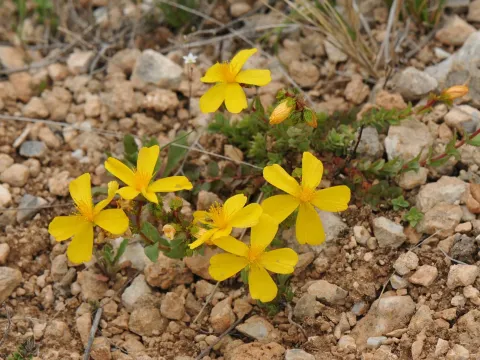
Rumelian St. John's-wort
Hypericum rumeliacum
Rumelian St. John's-wort (Hypericum rumeliacum) is a perennial herbaceous plant belonging to the Hypericaceae family. It is increasingly recognized in agricultural settings for its valuable chemical properties and relative ease of cultivation in temperate climates.
What the section contains
Rumelian St. John's-wort
The propagation of this crop is primarily done through seeds. For professional farming, seeds are often started in greenhouses during early spring (February or March) to ensure strong, viable transplants before the final frost-free date in the region.
Direct sowing in open fields can be performed once soil temperatures stabilize above 10–12 degrees Celsius. Row spacing should be maintained at 45–60 centimeters to allow for optimal plant development and sufficient access for weeding and monitoring operations.
Seeds are tiny and should be sown at a shallow depth of 0.5 to 1 centimeter. Consistent moisture is critical during the germination phase to ensure a uniform stand, as dry surface conditions can severely inhibit the establishment of the crop.
After the initial growth stage, thinning is performed to keep plants at a distance of 20–30 centimeters apart. This spacing is essential for reducing the humidity around the base of the plants, which helps to mitigate the risk of fungal infections in dense plantings.
Hypericum rumeliacum is highly demanding of sunlight. To achieve maximum yields of secondary metabolites, the plants must be situated in areas with full sun exposure. Shaded environments consistently result in lower concentrations of active ingredients in the harvested material.
The plant thrives in well-drained, sandy loam or loamy soils with a neutral to slightly acidic pH. Poorly drained, heavy clay soils are unsuitable, as they quickly lead to root rot and premature plant decline during periods of high precipitation.
Although it is drought-tolerant once established, supplemental irrigation is recommended during the vegetative growth phase and peak blooming periods. Maintaining consistent soil moisture levels during these times significantly boosts the total biomass production.
Fertilization should be managed carefully to avoid excessive nitrogen application, which can result in lush green growth that is more susceptible to pests and diseases. A balanced NPK fertilizer, with a higher ratio of phosphorus and potassium, supports root health and winter hardiness.
The crop is generally hardy, but in regions with harsh winters, providing a layer of mulch or ensuring the plants have established deep root systems before the first frost is crucial for survival. Good cultural practices ensure the longevity of the plant stand.
The harvesting of Rumelian St. John's-wort focuses on the aerial parts of the plant. Yields typically increase from the second year onwards as the root system matures and the plant forms larger, more productive clusters of stems and foliage.
Under optimal conditions, the plantation can remain productive for four to five years. After this period, plant vitality often naturally declines, necessitating the clearing of the plot and replanting to ensure the quality and consistency of the herbal raw material.
To maximize annual yields, growers often employ a selective cutting technique. By harvesting during the peak flowering stage, the plant is stimulated to produce secondary shoots, potentially allowing for two smaller harvests in a single season under favorable weather conditions.
The total yield of dry biomass depends on the planting density and the effectiveness of weed management strategies. Effective control of competing vegetation is the most significant factor in maintaining high yield levels throughout the life of the plantation.
Market demand for high-quality medicinal herbs makes this crop a viable option for specialized farms. When handled correctly, the consistent yield of this species provides a reliable source of income for producers focused on the pharmaceutical and cosmetic industries.
The primary threats to Hypericum rumeliacum are fungal pathogens that thrive in humid or stagnant air conditions. Rust, caused by various fungal species, is a common issue that manifests as discolored spots on the leaves, significantly reducing the crop's market value.
Root rot, often associated with soil-borne fungi such as Fusarium, represents a major risk in waterlogged soil. Ensuring adequate field drainage and avoiding overcrowding are the most effective preventive measures against these soil-borne diseases.
Leaf-eating insects and aphids can occasionally become problematic. Monitoring for these pests is essential, as heavy infestations can damage the foliage and flowers, rendering the harvested material unusable for high-end medicinal applications.
Weeds are the most consistent threat to the productivity of the crop. They compete for nutrients, water, and sunlight, and they can also harbor various pests and diseases that easily jump to the St. John's-wort plants if left unchecked by the farmer.
Biological control methods and integrated pest management (IPM) are highly recommended. Because the crop is intended for human consumption or medicinal use, the use of harsh synthetic pesticides should be minimized or strictly prohibited based on organic farming standards.
Harvesting is performed by cutting the stems at approximately 10–15 centimeters above the ground. This height is sufficient to protect the lower nodes and dormant buds, which are vital for the plant's ability to regenerate and regrow after the harvest.
Immediately after collection, the plant material must be processed. It should be kept in loose, breathable containers to prevent moisture accumulation and heating, which can lead to rapid fermentation and the degradation of delicate medicinal compounds.
Drying is conducted in controlled environments, such as shaded, well-ventilated sheds or specialized drying chambers, at temperatures not exceeding 45 degrees Celsius. Exceeding this temperature range causes the oil-filled glands to rupture and the active ingredients to dissipate.
Once dried to the appropriate moisture content, the product must be sorted and cleaned of any woody stems or debris. Quality control at this stage is essential, as the presence of impurities can downgrade the final product to a lower commercial category.
Proper storage is the final step in the harvest process. The dried herb should be packed in moisture-resistant and light-blocking materials and stored in a cool, dry warehouse until it is ready for processing or distribution to the end user.