
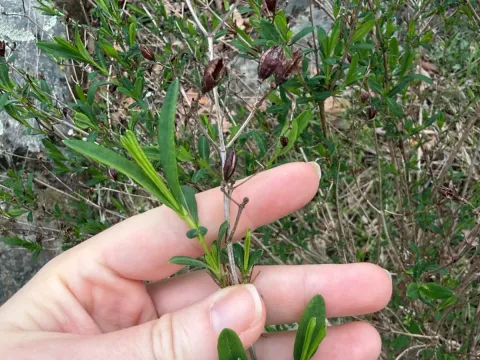
Shrubby St. John's wort
Hypericum prolificum
The propagation of Hypericum prolificum is primarily conducted through seeds or cuttings. Seeds should be sown in late autumn to allow for natural stratification over winter, which is essential for breaking dormancy and achieving consistent germination in the spring.
What the section contains
Shrubby St. John's wort
If seeds are stored, they must be artificially stratified in a cool environment (2–5°C) for several weeks before sowing. This preparation ensures that the seeds have the physiological signals required to begin the germination process in a controlled environment.
Cuttings are a preferred method for commercial nurseries to ensure genetic uniformity. Semi-hardwood cuttings taken in mid-summer, when the plant is actively growing, tend to root successfully when provided with high humidity and well-drained growing media.
During the early growth stage, young seedlings require protection from weed competition. Consistent weeding and adequate spacing between rows will allow the root systems to establish without resource-draining interference from invasive plant species.
Establishing a permanent site requires careful soil preparation, ensuring the ground is free of perennial weeds before planting. Once established, the shrub is known for its vigor and ability to thrive in various landscapes with minimal future intervention.
Shrubby St. John's wort is a hardy deciduous shrub belonging to the Hypericaceae family, native to North America. It is widely recognized for its high ornamental value and adaptability to various environmental stressors found in temperate regions.
The plant thrives in full sun exposure, which is necessary to produce the dense, bright yellow flower clusters that give the species its name. While it can survive in partial shade, the floral display is significantly diminished under such conditions.
It prefers well-drained, fertile soil but is notably tolerant of diverse soil types, including rocky or heavy clay soils, provided that there is no prolonged waterlogging. Good drainage is key to maintaining a healthy and disease-free root system.
Climate adaptability is one of the primary assets of Hypericum prolificum. It is cold-hardy and can withstand significant seasonal temperature changes, making it suitable for extensive cultivation across various geographic zones without the need for winter protection.
Maintaining the shrub's form and promoting vigorous growth requires periodic pruning. Removing old or damaged branches during the dormant winter season encourages the development of new, healthy foliage and increases the density of the shrub for the upcoming growing season.
Shrubby St. John's wort is generally resistant to most pathogens, but it can be susceptible to root rot if the soil remains excessively wet. Ensuring optimal soil drainage is the most effective preventative measure against soil-borne fungal diseases.
Leaf-feeding insects, such as certain species of beetles and caterpillars, can occasionally infest the shrubs. Monitoring for defoliation is important during the active growing season, and localized treatment can be applied if populations reach damaging levels.
Fungal issues like rust may occur in regions with high humidity levels. Management involves proper plant spacing to facilitate airflow, which reduces the time the leaves remain wet and inhibits the conditions necessary for fungal spore development.
Sanitation practices, such as removing fallen leaf litter and infected plant material from the site, are essential to break the disease cycle and prevent the overwintering of pathogens that could threaten future crops in the following year.
Integrated pest management strategies should focus on preventive measures. By keeping the shrubs healthy through proper fertilization and watering, the plants are naturally better equipped to resist and recover from pest pressures throughout the year.