
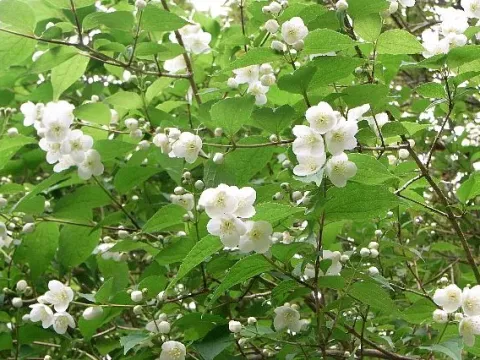
Shikoku mock-orange
Philadelphus shikokianus
Shikoku mock-orange (Philadelphus shikokianus) is a deciduous flowering shrub belonging to the Hydrangeaceae family. It is highly valued in horticulture for its fragrant blossoms and robust growth habit in suitable climatic conditions.
What the section contains
Shikoku mock-orange
The plant originates from the Japanese island of Shikoku, where it naturally inhabits forest edges and mountain slopes. Its preference for temperate conditions reflects its native habitat, which is characterized by moderate moisture and protection from harsh elements.
When cultivating this species, choose a location with full sun to partial shade, ensuring the shrub receives adequate light for optimal flowering. Fertile, well-draining soil is essential to maintain the health and vigor of the root system.
Agricultural practices for this crop involve consistent irrigation throughout the growing season, particularly in the weeks leading up to and during the bloom period. Applying organic mulch around the base helps retain soil moisture and suppresses weeds.
Routine pruning is necessary to maintain the plant's structural integrity. By removing dead wood and thinning out dense branches after flowering, gardeners can promote healthier growth and ensure more prolific blooming in the following season.
Aphids are the most common pests, typically clustering on young shoots and buds. Monitoring the plants during early spring allows for prompt intervention with insecticidal soaps or horticultural oils to prevent major infestations.
Spider mites may become a problem during hot, dry summer periods. Improving air circulation around the canopy and periodic misting of the foliage can deter these pests from establishing themselves.
Fungal issues such as gray mold (Botrytis) can develop if the shrub is planted in poorly ventilated areas with high humidity. Proper spacing between plants is a critical preventive measure against such diseases.
Leaf spot diseases can occur due to prolonged rainfall or excessive dew. Cleaning up fallen leaves under the shrub prevents fungal spores from overwintering and reinfecting the plant in the spring.
Powdery mildew might appear as a white coating on the leaves during fluctuating temperatures. Maintaining balanced nutrient levels and avoiding excessive nitrogen fertilizer helps keep the plant foliage resistant to this disease.