
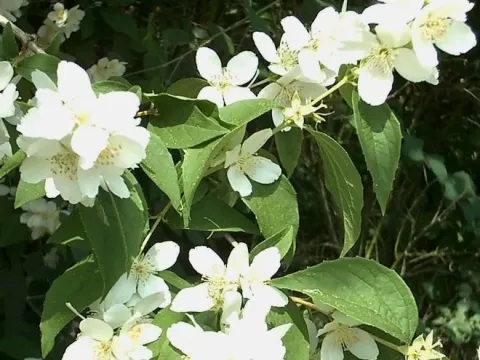
Silk-calyx mock orange
Philadelphus sericanthus
The Silk-calyx mock orange (Philadelphus sericanthus) is a member of the Hydrangeaceae family. It is a deciduous shrub native to China, where it thrives in forest understories and mountainous regions.
What the section contains
Silk-calyx mock orange
This species is valued for its distinct floral structures. To ensure healthy development, it requires a position with full sun or partial shade. While it can survive varied climates, it is best suited for temperate zones where it can avoid extreme, prolonged frost.
The soil requirements are specific: the plant demands fertile, well-drained loamy soil. It is crucial to avoid heavy clay or waterlogged soils, as the root system is highly sensitive to hypoxia caused by excess water.
Good agricultural practices include regular watering, especially during the establishment phase and summer dry spells. Mulching the base of the plant helps retain soil moisture and suppresses weed growth, which is beneficial for the root system.
In landscaping, this plant is primarily utilized for its aesthetic value. It is excellent for flowering hedges, garden borders, or as a focal point in a mixed shrub landscape, providing a lush green backdrop and delicate blossoms.
Common pests that may affect this plant include aphids, which often cluster on tender new foliage. Spider mites can also be a nuisance during hot, dry summer months, leading to leaf yellowing and structural damage.
Fungal diseases are the main threats to the plant's health, particularly powdery mildew. These diseases often emerge when air circulation is poor, which highlights the need for strategic pruning and adequate spacing between specimens.
Management of these threats involves both mechanical and chemical interventions. Regular inspection of the undersides of the leaves allows for the early detection of pests, enabling quick application of insecticidal soap or appropriate chemical treatments.
Pruning is essential not only for shape but for sanitation. Removing crossing branches and clearing debris from around the base reduces the hiding spots for pests and improves light penetration to the inner canopy.
Maintaining a healthy nutrient balance through soil amendments assists the shrub in resisting stress. When the plant is robust and healthy, it possesses a significantly higher innate ability to recover from minor insect attacks and seasonal environmental stressors.