
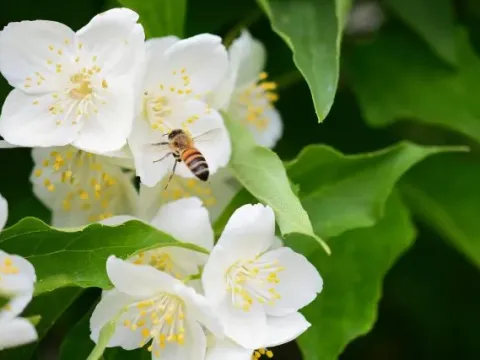
Shrenk's mock-orange
Philadelphus schrenkii
Shrenk's mock-orange (Philadelphus schrenkii) is a deciduous flowering shrub belonging to the Hydrangeaceae family. Native to the temperate regions of the Russian Far East, Korea, and northeastern China, this plant is well-regarded for its fragrant white flowers and high tolerance to cold environments.
What the section contains
Shrenk's mock-orange
The shrub thrives best in fertile, well-drained loamy soils that provide consistent moisture without waterlogging. Site selection is crucial; while the plant is adaptable, it performs best in full sun to partial shade settings where soil pH remains slightly acidic to neutral to ensure optimal nutrient uptake.
From an agrotechnical perspective, maintaining soil hydration during the spring blooming period is essential for floriferous performance. Organic mulching around the base of the shrub helps regulate soil temperature and suppresses weeds, reducing competition for essential mineral resources throughout the growing season.
Pruning should be performed immediately after the flowering period to encourage new growth. Removing approximately one-third of the oldest stems every few years promotes better airflow through the canopy, which is vital for preventing moisture-related issues and maintaining the structural integrity of the plant.
Economically and aesthetically, this species is highly utilized in landscape architecture, particularly for creating ornamental shrub borders and privacy screens. Its resilience to low winter temperatures makes it a preferred choice for northern gardens looking to incorporate fragrant, reliable flowering perennials.
Common pests include aphids and spider mites, which can weaken the shrub during hot and dry summer months. Gardeners should monitor the underside of the leaves regularly and employ horticultural oils or integrated pest management strategies to keep infestation levels under the threshold that causes damage.
Pathogenic threats such as leaf spot and powdery mildew may appear if the plant is subjected to poor air circulation or excessive humidity. Maintaining proper spacing during the initial installation of the landscape design significantly reduces the incidence of these fungal outbreaks and preserves overall plant vigor.