
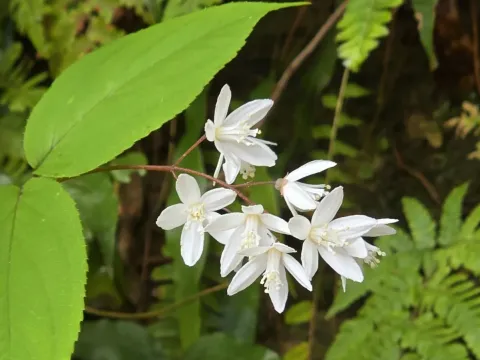
Taiwan deutzia
Deutzia taiwanensis
Taiwan deutzia (Deutzia taiwanensis) is a deciduous shrub that belongs to the Hydrangeaceae family. It is native to the mountainous regions of Taiwan, where it thrives in moist, well-drained forest environments.
What the section contains
Taiwan deutzia
The plant requires fertile, loamy soil with a neutral to slightly acidic pH level for optimal growth. It is essential to ensure that the site has excellent drainage, as the roots are sensitive to waterlogging, which can lead to fungal infections.
Taiwan deutzia prefers full sun or partial shade conditions. It is important to select a planting location protected from harsh winds, which can damage the delicate branches and buds during the dormant winter period.
Agricultural practices for this shrub involve consistent watering during dry spells and applying organic mulch to retain moisture. Annual pruning is necessary after flowering to remove old wood and encourage the development of new, vigorous growth.
The primary use of this species is ornamental. It is widely planted in public parks and private gardens for its white, racemose flower clusters that create a stunning visual display in late spring and early summer.
Powdery mildew is the most common disease affecting Taiwan deutzia, particularly in regions with high humidity or poor air circulation. Proper spacing between plants significantly reduces the risk of this fungal pathogen.
Aphids can infest new shoots and foliage during the growing season. If a significant population is detected, applying appropriate horticultural oils or insecticidal soap is recommended to control the infestation.
Foliar spot diseases may occur when the leaves remain wet for extended periods. To mitigate this risk, gardeners should perform overhead irrigation sparingly and ensure the plant is located in an area with good air movement.
Occasional damage from leaf-eating insects may occur. Regular monitoring of the shrub's health allows for quick intervention, ensuring that the plant remains attractive and continues to produce healthy blooms annually.
Maintaining proper soil fertility and avoiding excessive nitrogen fertilization helps prevent weak growth, which is more susceptible to secondary pest attacks. A balanced approach to nutrition is key for plant resilience.