
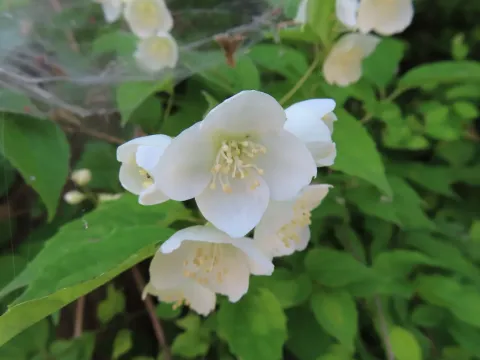
Satsuma mock orange
Philadelphus satsumanus
Satsuma mock orange (Philadelphus satsumanus) is a deciduous flowering shrub belonging to the Hydrangeaceae family. It originates from East Asia, specifically Japan, where it thrives in natural woodland edges.
What the section contains
Satsuma mock orange
This shrub requires fertile, well-draining soil with a pH ranging from neutral to slightly acidic. Incorporating compost or well-rotted manure during planting enhances the soil structure and nutrient availability.
In terms of light, the plant performs best in full sun but tolerates partial shade. In warmer climates, afternoon shade is beneficial to prevent leaf scorching and excessive moisture loss.
The cultural requirements include consistent watering, particularly during the active growth phase in spring and summer. Drought stress should be avoided to ensure vigorous floral production.
Pruning is essential for maintaining an aesthetic shape and promoting flowering. It should be conducted immediately after the bloom cycle to allow time for new growth to mature before winter.
Common pests associated with Philadelphus satsumanus include aphids, which often cluster on tender new foliage, causing leaves to curl and stunt growth.
Fungal issues such as powdery mildew can occur during humid, stagnant conditions. The characteristic white powdery coating on leaves can be mitigated by ensuring proper spacing for air movement.
Leaf spots caused by various fungi might appear during prolonged wet weather. Good sanitation practices, such as clearing fallen leaves, are vital to reducing disease inoculum levels.
If chemical interventions are necessary, they should be applied judiciously, favoring treatments that are environmentally friendly and safe for pollinators attracted to the flowers.
Vigilant monitoring of the shrub throughout the growing season helps to catch infestations early, making it easier to manage plant health without aggressive chemical use.