
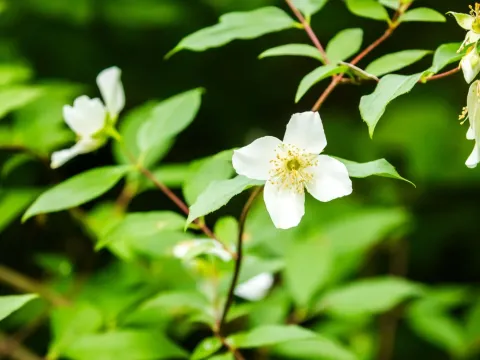
Scentless mock-orange
Philadelphus inodorus
Philadelphus inodorus, commonly known as the scentless mock-orange, is a deciduous shrub belonging to the Hydrangeaceae family. It is highly valued for its elegant, arching branches and pure white blossoms.
What the section contains
Scentless mock-orange
Native to the southeastern United States, this shrub has adapted to various temperate climates. It is frequently utilized in botanical gardens and domestic landscapes for its aesthetic appeal during late spring and early summer.
For successful cultivation, the plant requires a location with full sun to partial shade. The ideal soil should be moist, well-draining, and rich in organic matter to support vigorous annual growth and blooming.
Basic maintenance involves consistent irrigation during dry spells and periodic pruning. Removing older, non-flowering stems helps to stimulate new growth and maintains a tidy, attractive shape for the shrub.
The primary use of Philadelphus inodorus is ornamental. It is often planted as a focal point in borders or massed together to create dense, flowering hedges that provide privacy and seasonal interest.
The scentless mock-orange may occasionally be targeted by common pests such as aphids and spider mites. These insects typically congregate on the undersides of leaves or around succulent new growth tips.
Management of these pests involves using horticultural soaps or systemic insecticides when outbreaks are severe. Encouraging natural predators, such as ladybugs, can also help keep insect populations under control.
Fungal diseases like powdery mildew can impact the health of the plant, especially in high humidity or areas with poor airflow. Providing adequate spacing between plants is a crucial preventive measure.
If fungal infections are detected, gardeners should prune away affected branches and apply appropriate fungicides to prevent the spread of spores. Keeping the garden bed clean of debris is also very important.
Maintaining balanced soil fertility is key to plant resilience. Over-fertilization can lead to weak, succulent tissue that is more attractive to pests and susceptible to various environmental stressors.