
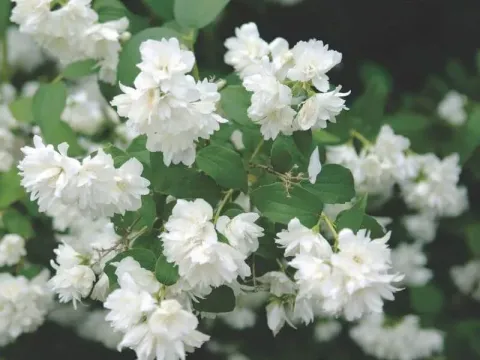
Snow mock orange
Philadelphus nivalis
Snow mock orange (Philadelphus nivalis) belongs to the Hydrangeaceae family and is a deciduous shrub highly valued for its abundant, snow-white flowers. Native to North America, this species is well-adapted to temperate climate zones.
What the section contains
Snow mock orange
The crop prefers sunny, well-lit areas but can tolerate partial shade without significant loss of its decorative properties. It is important to avoid locations with stagnant cold air to prevent frost damage to the new growth in early spring.
Regarding soil, the plant thrives in fertile, loose, and well-drained loams. Maintaining moderate soil moisture is crucial, as the root system is sensitive to both prolonged drought and excessive waterlogging during the growing season.
The basic agronomic care involves regular pruning, carried out immediately after the flowering period. Removing old wood stimulates the development of new, vigorous shoots and helps maintain the shrub's desired shape and vigor.
In landscape design, this shrub is used for hedges, shrub borders, or as a specimen plant. Its high frost resistance makes it an excellent choice for various regions, offering both aesthetic appeal and reliable growth performance.
Aphids are the most common pests that affect the foliage and flower buds, potentially stunting the shrub's growth. Systemic insecticides or natural treatments are effective tools for managing these infestations.
Spider mites can become a nuisance during hot and dry spells, particularly in low humidity conditions. Regular monitoring of the foliage and overhead misting can effectively discourage the mite population from building up.
Fungal diseases like gray mold can occur if air circulation is poor or if the soil remains constantly soggy. Pruning to open up the canopy is a recommended preventive strategy for ensuring better airflow.
Leaf spot diseases may appear during wet seasons, so applying copper-based fungicides in the early spring can help protect the leaves. This preventative measure ensures the foliage remains healthy throughout the summer.
Overall, this plant is quite resilient when provided with proper environmental conditions. A healthy, well-fed, and adequately pruned shrub is naturally more capable of resisting pests and diseases.