
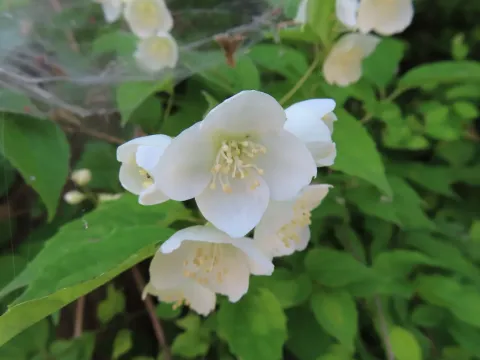
Satsumi mock orange
Philadelphus satsumi
Satsumi mock orange (Philadelphus satsumi) is a deciduous shrub belonging to the Hydrangeaceae family. Native to Japan, this species is highly valued in horticulture for its elegant appearance and fragrant blossoms.
What the section contains
Satsumi mock orange
Regarding climate requirements, this plant thrives in temperate regions with moderate moisture. It performs best in locations that receive full sun or partial shade, provided they are shielded from harsh, drying winds.
The soil should be fertile, humus-rich, and well-drained. While the shrub is adaptable, it performs poorly in heavy, waterlogged clay soils, which can lead to root system degradation over time.
Successful cultivation requires regular irrigation, especially during the establishment phase and periods of drought. Fertilizer application, typically using balanced fertilizers in early spring, promotes vigorous growth and flowering.
Maintenance involves pruning after the flowering cycle is complete. This helps manage the plant's shape and encourages the development of new flowering wood for the following season.
Common pests affecting Philadelphus satsumi include aphids, which can infest new shoots and foliage. Regular monitoring is essential to prevent significant damage to the plant's aesthetic value.
Spider mites are another concern, particularly in hot and dry climates. Improving humidity around the plant and ensuring proper site selection can help mitigate the risk of mite infestations.
Fungal diseases, such as leaf spot or powdery mildew, may occur if the plant is subjected to poor air circulation or excessive moisture on the foliage. Proper spacing during planting is a key preventive measure.
Gardeners should perform consistent sanitary pruning to remove damaged or diseased branches. This practice prevents the accumulation of pathogens and promotes the overall health of the shrub.
If chemical intervention becomes necessary, use appropriate insecticides or fungicides according to the manufacturer's instructions. Integrated pest management practices are highly recommended for sustainable growth.