
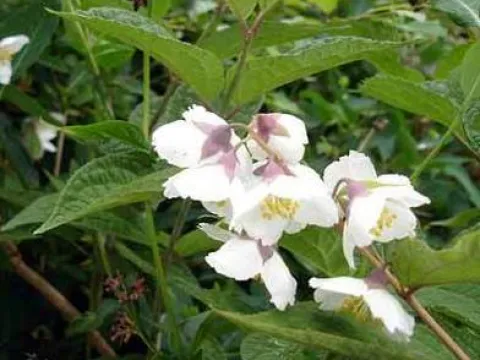
Purple mock orange
Philadelphus purpurascens
The Purple Mock Orange (Philadelphus purpurascens) is a decorative shrub belonging to the Hydrangeaceae family. Native to the mountainous regions of Southwestern China, this plant has gained popularity for its fragrant flowers and elegant habit.
What the section contains
Purple mock orange
Regarding environmental requirements, this shrub thrives in locations with full sun to partial shade. In its natural habitat, it adapts well to temperate climates, but it performs best when provided with protection from harsh midday sun in warmer zones.
Soil conditions are critical for the health of the plant. It requires well-draining, fertile soil with a neutral to slightly acidic pH level. Adding organic matter, such as compost or peat, can significantly improve soil structure and water retention capabilities.
Standard agronomic practices involve consistent watering during the growing season, especially during dry spells. Although established plants have some drought tolerance, regular moisture is essential for producing high-quality flower buds.
Pruning should be performed immediately after the flowering period to encourage new growth. Removing approximately one-third of the oldest branches helps to maintain the shrub's vigor and prevents it from becoming overly woody and sparse.
Pests such as aphids and spider mites are the primary threats to the foliage of Philadelphus purpurascens. These insects can quickly proliferate in hot, dry conditions, causing leaf curling and reduced plant vitality.
Fungal diseases, including powdery mildew, may occur if the shrub is planted in an area with poor air circulation or high humidity. Ensuring adequate spacing between plants is a vital cultural control method.
In case of severe infestations, horticultural oils or insecticidal soaps are highly effective. These treatments target the pests directly while minimizing the impact on beneficial insects within the garden ecosystem.
Root rot caused by poor soil drainage is a significant risk factor during rainy seasons. Always verify the drainage capacity of the planting site before installation to avoid suffocating the root system.
Sanitation practices, such as clearing debris from around the base of the plant in late autumn, are necessary to prevent the overwintering of pathogens and harmful insect larvae in the garden soil.