
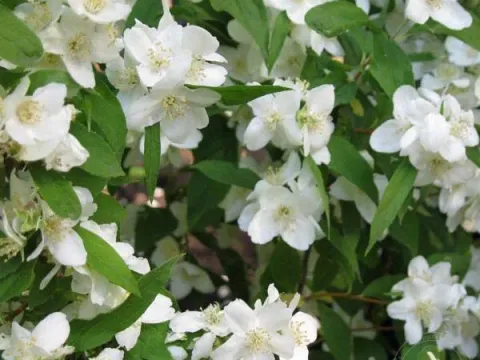
Willow-leaf mock orange
Philadelphus salicifolius
The willow-leaf mock orange belongs to the Hydrangeaceae family and is recognized for its unique, lance-shaped foliage which provides a distinct aesthetic compared to other Philadelphus species. It thrives in positions that receive full sun to partial shade, which encourages a dense and healthy growth habit.
What the section contains
Willow-leaf mock orange
Successful cultivation requires fertile, well-draining soil that is rich in organic matter. As with many ornamental shrubs, heavy clay soils should be amended with compost or sand to improve drainage and prevent root rot, as the plant does not tolerate stagnant water around its root ball.
Regarding climatic requirements, this shrub prefers moderate temperatures and requires protection from cold, drying winds in early spring. While generally hardy, providing a layer of mulch around the base helps stabilize soil temperature and moisture levels, ensuring the plant remains healthy throughout the year.
The agronomic management includes deep watering during prolonged dry spells to maintain leaf turgor and overall vitality. Fertilization with a balanced slow-release granular fertilizer early in the spring supports the development of new shoots and prepares the plant for its productive season.
In landscaping, this species is highly valued for its ornamental versatility. It is commonly used in mixed shrub borders, as a decorative feature in garden landscapes, or as part of a hedge to provide visual interest through its distinctive foliage structure and elegant form.
Common pests that affect Philadelphus salicifolius include aphids and spider mites, which typically target the undersides of leaves. If infestation occurs, it is recommended to apply horticultural oils or mild insecticidal soaps early in the morning to avoid burning the foliage while managing the pest population.
Fungal issues such as powdery mildew can become a concern during seasons with high humidity and poor air circulation. Improving plant spacing and performing regular pruning to open up the canopy effectively reduces the likelihood of these pathogens establishing and ensures a healthy, aesthetically pleasing shrub.