
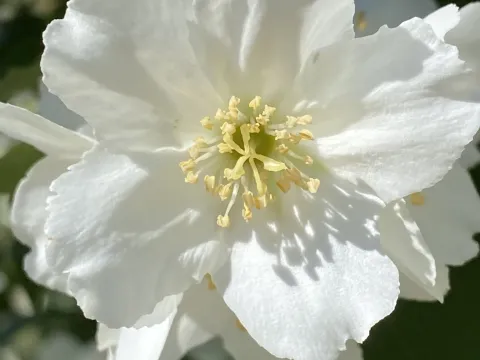
Philadelphus laxiflorus
Philadelphus laxiflorus
Philadelphus laxiflorus is a deciduous shrub belonging to the Hydrangeaceae family. Known for its distinct inflorescence structure, this species is native to parts of East Asia where it has adapted to temperate forest fringes and hillside habitats.
What the section contains
Philadelphus laxiflorus
The plant thrives in full sun but maintains sufficient health in partial shade. However, optimal flowering performance is only achieved when the shrub receives at least six hours of direct sunlight per day, which prevents leggy growth.
Regarding soil requirements, the species performs best in fertile, well-drained loamy soils. It is critical to avoid waterlogged areas, as the root system is sensitive to prolonged moisture, which can lead to root rot and diminished plant vigor.
Standard agronomic maintenance includes consistent watering throughout the growing season, particularly during prolonged dry spells. Applying a layer of organic mulch around the base of the shrub helps regulate soil temperature and retain moisture levels.
The primary agricultural and horticultural use for Philadelphus laxiflorus is landscaping. Due to its aesthetic appeal and fragrance, it is frequently utilized in urban planting, hedges, and mixed shrub borders to enhance the visual diversity of green spaces.
Common pests associated with this species include aphids and spider mites, which can damage new foliage and stems. Integrated pest management strategies, involving both biological controls and targeted chemical treatments, are recommended for maintaining plant health.
Fungal diseases such as leaf spot and powdery mildew are prevalent when plants are overcrowded or grown in high-humidity conditions without adequate airflow. Pruning to maintain an open canopy structure is the most effective preventative measure against these threats.