
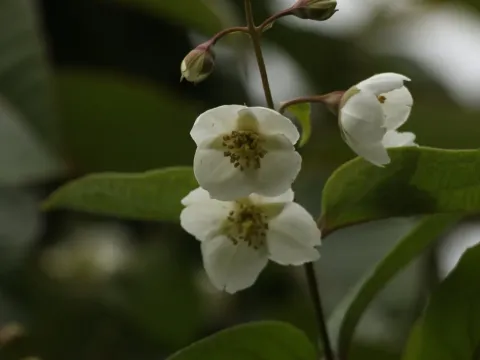
Philadelphus tomentosus
Philadelphus tomentosus
Philadelphus tomentosus is a deciduous shrub belonging to the Hydrangeaceae family. Known for its elegant appearance, it is a valuable ornamental plant that enhances gardens with its refined foliage and classic floral display.
What the section contains
Philadelphus tomentosus
Native to East Asia, this species thrives in temperate climates. It prefers sunny locations but can tolerate partial shade, which makes it versatile for landscape planning in various garden environments.
Regarding soil requirements, it prefers moist but well-drained, fertile soil. It performs best in a slightly acidic to neutral pH environment. Ensuring good drainage is critical, as the plant is sensitive to waterlogged conditions that can damage its root system.
Cultivation practices involve regular pruning to maintain shape and encourage fresh growth. Applying organic mulch around the base of the plant helps to conserve soil moisture and suppresses the growth of competitive weeds.
Consistent watering during the growing season is essential for the plant to thrive. In drier regions, supplementing with a balanced fertilizer in the early spring can significantly boost the overall vigor and flowering capacity of the shrub.
The most common pest affecting Philadelphus species is the aphid. These small insects tend to cluster on young, succulent shoot tips, causing leaf curling and potentially transmitting viral diseases if not controlled early.
Fungal issues, particularly leaf spot and powdery mildew, can occur if the plant is grown in areas with poor air circulation or high humidity. These diseases appear as spots or white powdery coatings on the leaves, impacting aesthetic value.
Spider mites are another potential threat, especially during hot, dry summers. These microscopic pests feed on the underside of leaves, causing a stippled appearance and eventual leaf drop if the infestation remains untreated.
Root rot remains a risk if soil drainage is inadequate. This condition is often fatal, making it important to monitor soil moisture levels and ensure that water does not pool around the base of the shrub during periods of heavy rain.
Integrated pest management, including pruning for airflow and regular inspections, is the most effective approach. Use targeted insecticides or fungicides only when necessary to preserve the garden ecosystem and plant health.