
Fingerleaf pelargonium
Pelargonium crispum (P. J. Bergius) L'Hér.
Description
Growing requirements
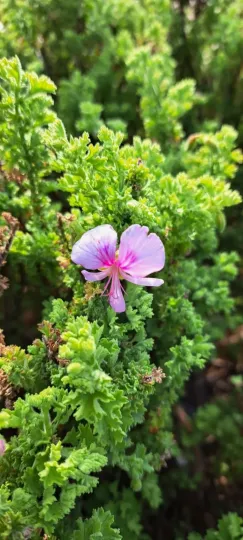
The fingerleaf pelargonium (Pelargonium crispum) is a perennial subshrub belonging to the Geraniaceae family. Native to the Cape region of South Africa, it is widely recognized for its rigid, upright growth habit and distinctively lemon-scented, curled foliage.
The plant exhibits high drought tolerance due to its evolutionary adaptation to arid climates. It is characterized by small, fan-shaped leaves with crinkled margins that contain essential oil glands, releasing a refreshing scent upon touch.
Cultivation requires full sun exposure to maintain the plant's compact, bushy habit. If placed in shaded areas, the stems become leggy, reducing the plant's aesthetic value and structural integrity, which makes correct light management essential.
Soil requirements focus on excellent drainage; a sandy or loamy potting mix is preferred. Being highly susceptible to root rot, the plant should never be allowed to sit in waterlogged soil, making appropriate container selection and drainage systems critical.
Temperature management during the growing season should range from 18°C to 24°C. During the dormant winter season, a cool environment (approximately 10°C to 12°C) is necessary to promote healthy physiological cycles and ensure successful flowering in the spring.
Yield
This crop is primarily cultivated for the ornamental plant market. Additionally, its leaves are harvested for the extraction of aromatic oils, which are used in aromatherapy and the cosmetic industry for their unique citrus scent profile.
Main diseases and pests
Common diseases include grey mold (Botrytis) and various root rots triggered by high humidity and poor air circulation. Proper plant spacing and controlled watering schedules are vital practices to mitigate these fungal risks.
Major pests affecting this species include whiteflies and spider mites, especially in greenhouse conditions. Integrated pest management, including regular inspection and the use of insecticidal soaps or systemic treatments, is required for commercial production.