
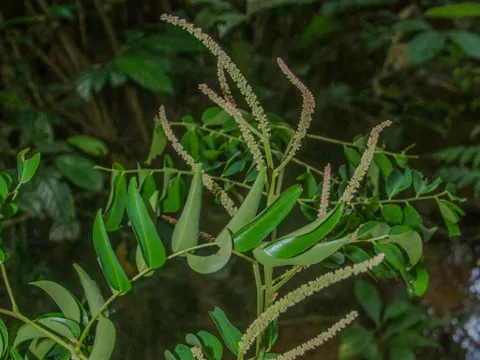
Fillaeopsis
Fillaeopsis
Fillaeopsis is a genus of trees belonging to the legume family (Fabaceae). These trees are native to the tropical rainforests of West and Central Africa, where they play a vital role in the local ecosystem.
What the section contains
Fillaeopsis
The crop requires a hot and humid equatorial climate to thrive, showing a preference for stable environmental conditions without significant temperature fluctuations throughout the year.
Regarding soil requirements, Fillaeopsis prefers well-drained alluvial or tropical red soils that are rich in organic nutrients to support its extensive root system.
The tree exhibits typical legume traits, including nitrogen fixation, which contributes to soil fertility and makes it a beneficial component of mixed tropical forest stands.
In terms of agricultural and forestry usage, the wood is utilized for various construction purposes due to its density and durability, though commercial plantation management is complex and requires specialized knowledge.
Root rot pathogens are a primary threat to Fillaeopsis, especially in areas where soil drainage is inadequate, leading to waterlogged conditions that weaken the root system.
Wood-boring insects present a major risk to mature trees, as they can cause extensive internal damage to the timber, rendering the wood unsuitable for commercial use.
Deforestation and habitat fragmentation are significant anthropogenic threats, drastically reducing the number of mature individuals capable of natural regeneration.
Fungal infections of the leaves can occur during periods of excessive humidity and stagnant air, particularly affecting young trees in nurseries or dense plantations.
Competition from invasive plant species can hinder the establishment of seedlings, as they often outcompete the slower-growing Fillaeopsis for light and ground space during the early stages.