
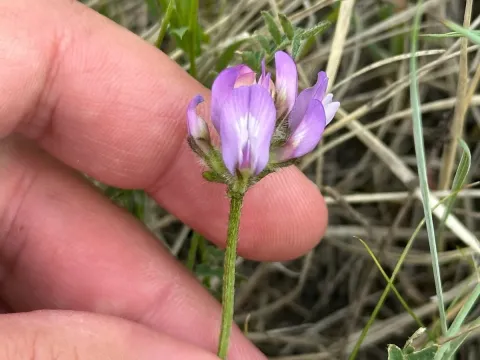
Field milkvetch
Astragalus agrestis
Field milkvetch (Astragalus agrestis) is a perennial herbaceous plant belonging to the Fabaceae family. It is known for its resilience and adaptability to northern and temperate climates.
What the section contains
Field milkvetch
Sowing should ideally occur in early spring to utilize residual moisture. Late summer sowing is also possible in regions with sufficient autumn rainfall to ensure plant establishment before winter.
Seeds of Astragalus agrestis exhibit physical dormancy due to hard seed coats. Mechanical or chemical scarification is recommended prior to planting to maximize germination rates.
The seeds should be sown at a shallow depth of approximately 1–2 centimeters. Row spacing is typically kept between 20 and 40 centimeters depending on the intended use of the crop.
During the establishment phase, the crop requires minimal competition from weeds. Proper soil preparation before sowing is essential for a successful crop stand.
The plant thrives in open, sunny environments. It is well-suited for diverse soil types, including sandy loams and calcareous soils, provided there is adequate drainage.
Field milkvetch is highly drought-tolerant once established, thanks to its extensive root system. It can survive in regions with relatively low annual precipitation.
The species prefers neutral to slightly alkaline soil conditions. It does not tolerate waterlogged soils, as this condition promotes root rot and reduces plant vigor.
Temperature tolerance is a hallmark of this species, as it is adapted to survive cold winters and withstand rapid temperature changes during the growing season.
As a legume, it does not require heavy nitrogen fertilization, as it forms a symbiotic relationship with Rhizobium bacteria to fix atmospheric nitrogen.
The biomass yield of field milkvetch is generally moderate. It is primarily valued as a component of mixed hay or pasture, contributing to the nutritional quality of the feed.
Forage quality remains high during the early vegetative stage. Harvesting before full bloom ensures the highest protein and mineral content in the hay.
In optimal conditions, the species demonstrates good regrowth capacity after harvesting, allowing for multiple cuts per season depending on climate conditions.
Seed yield varies depending on the success of pollination. Protecting pollinators in the area is crucial for enhancing seed production in field cultivation.
Regular maintenance, including controlled grazing or mowing, helps keep the stand productive over many years.
Powdery mildew is the most common fungal disease, particularly when weather conditions are humid and air circulation within the canopy is limited.
Various species of aphids and weevils represent the main pest threats, often targeting the growing tips and developing seed pods.
Integrated pest management, including crop rotation and field sanitation, is the preferred approach to mitigate damage without excessive chemical use.
Monitoring the field for leaf-eating insects is recommended, especially during the early spring when the plant is most vulnerable to damage.
Maintaining balanced soil nutrition helps the plants develop thicker cuticles, making them more resistant to both environmental stress and pest attacks.