
Faba bean
Vicia faba L.
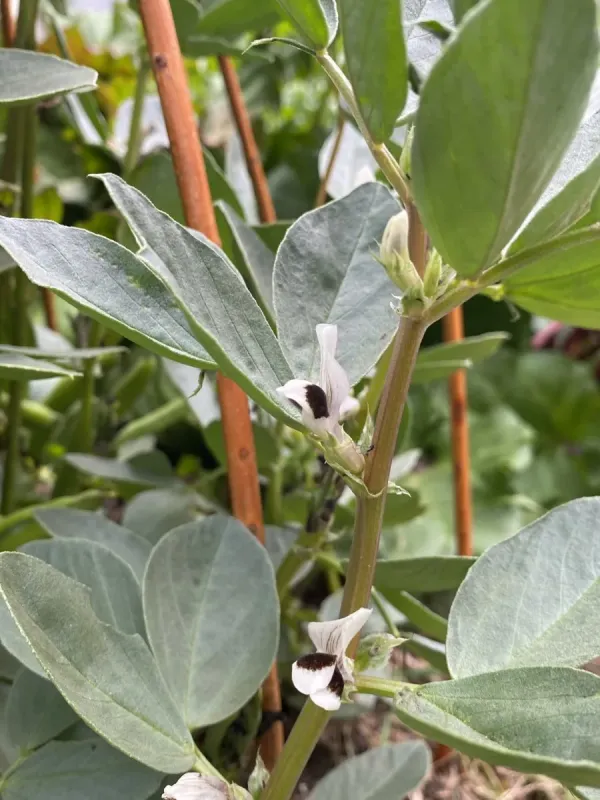
Description
Sowing dates
Faba beans are a cool-season crop, known for their remarkable frost tolerance, which allows them to be sown early in the spring as soon as the soil is workable.
In temperate climates, the ideal time for sowing is late winter or early spring, ensuring the plants establish before the onset of extreme summer heat.
Seeds should be planted at a depth of 5 to 10 cm, depending on soil texture, with shallower planting in heavier soils and deeper planting in lighter, sandy soils.
The row spacing typically ranges from 45 to 60 cm to allow for adequate airflow and weed control throughout the active growing season.
Proper plant density is critical; too many plants per square meter can lead to increased humidity within the canopy, fostering fungal disease development.
Growing requirements
Faba beans thrive in deep, well-drained, and moisture-retentive soils, preferably with a neutral to slightly alkaline pH level ranging from 6.5 to 7.5.
They are moderately drought-tolerant but require consistent soil moisture, especially during the flowering and pod-filling stages to maximize yield potential.
The crop requires full sun exposure to produce strong, sturdy stems; insufficient light often results in thin, etiolated plants that are prone to lodging.
In terms of nutrition, they have a lower requirement for nitrogen fertilizers because they form a symbiotic relationship with nitrogen-fixing bacteria in the soil.
Good soil structure and preparation are essential; incorporating organic matter before planting improves water retention and nutrient availability for the crop.
Yield
The yield of faba beans is highly variable and depends significantly on environmental conditions during the critical window of flowering and pod set.
Under optimal agronomic management and favorable weather conditions, grain yields can reach up to 4–6 tons per hectare in professional farming systems.
Small-scale gardeners can expect to harvest substantial quantities of green pods, often exceeding 1.5 kg per square meter with proper maintenance and irrigation.
Pollination success is a key yield driver; hence, ensuring the presence of bees and other pollinators is vital for achieving uniform pod development.
Managing soil fertility through balanced applications of phosphorus and potassium helps to improve seed filling and increases the overall weight of the harvest.
Main diseases and pests
The black bean aphid (Aphis fabae) is a primary pest that attacks the growing tips of the plants, causing severe stunting and serving as a vector for viruses.
Chocolate spot, caused by Botrytis species, is a prevalent fungal disease that manifests as brown necrotic lesions on leaves and pods, especially in humid conditions.
Rust (Uromyces viciae-fabae) can quickly become a major threat, showing up as reddish-brown pustules that reduce photosynthesis and eventually kill the foliage.
Root rot pathogens are a persistent problem in poorly drained or waterlogged soils, leading to significant stand loss during the early seedling stages.
- Black bean aphid
- Chocolate spot (Botrytis)
- Bean rust
- Root rot pathogens
- Pea and bean weevil
Harvesting
Harvesting for fresh consumption is done while the seeds are still green and tender, usually when the pods are plump but before the seed coat turns tough.
For dry seed production, the crop should be left in the field until the pods turn black or dark brown and the moisture content drops significantly.
Mechanical harvesting is commonly practiced using combine harvesters, which require precise settings to avoid cracking or damaging the seed coats.
Post-harvest handling involves cleaning the seeds of field debris and drying them down to approximately 13-14% moisture content to prevent spoilage in storage.
Proper storage in cool, dry, and rodent-proof containers is essential to maintain seed viability and nutritional quality for long-term food or feed supplies.