
Fava bean
Vicia faba L. var. major Harz
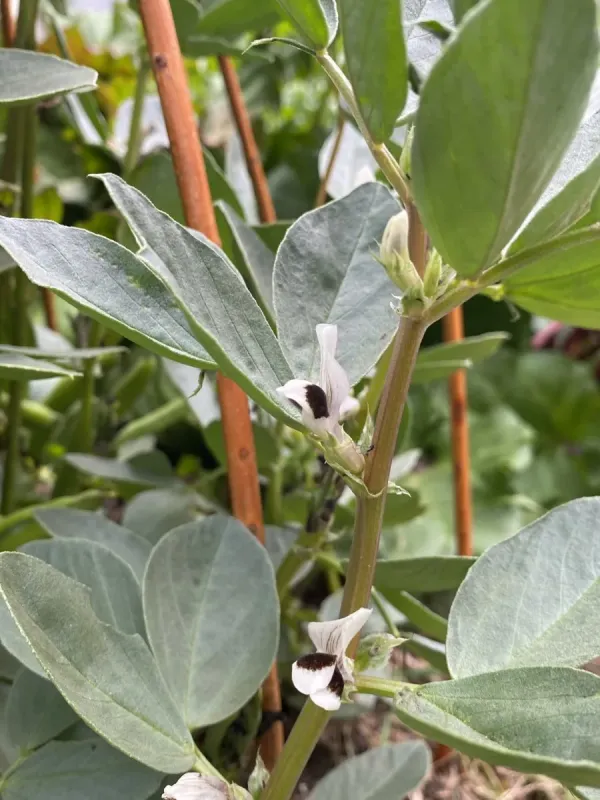
Description
Sowing dates
Fava beans are considered a cool-season crop, as their seeds can germinate in soil temperatures as low as +3°C to +5°C. The optimal planting time is early spring, as soon as the soil is dry enough to be worked.
To ensure a continuous harvest, gardeners practice staggered planting with intervals of 10–14 days before the onset of intense summer heat. Seeds should be sown at a depth of 6–8 cm depending on soil texture.
Autumn sowing is only feasible in regions with mild climates where there is no risk of frost damage to young seedlings. In temperate zones, seeds are sown as early as possible to allow the plants to form pods before temperatures rise.
Plant density ranges from 20 to 30 plants per square meter. A recommended spacing is 45–60 cm between rows and 10–15 cm between plants within the row.
The crop is highly cold-tolerant; young seedlings are capable of withstanding short-term frosts of up to -6°C without significant loss of productivity.
Growing requirements
Fava beans prefer fertile, heavy loamy or clay soils that hold moisture well. In sandy soils, the crop develops poorly due to water shortages during critical growth stages.
The plant is light-loving and requires open areas sheltered from strong winds. In shaded conditions, the stems tend to stretch, which leads to a sharp decrease in yield.
Water requirements are high; the crop is very sensitive to drought during the flowering and pod-filling phases. Supplemental irrigation is necessary if precipitation is insufficient.
The soil should have a neutral or slightly alkaline pH (6.5–7.5). In acidic soils, fava beans grow weakly because the nitrogen-fixing nodule bacteria cease their activity.
The optimal temperature for vegetative growth is +15°C to +22°C. When temperatures exceed +25°C, the pollination process slows down, leading to flower and pod drop.
Yield
Average yields of fresh green fava beans in the milk stage range from 1.5 to 3 kg per square meter depending on cultivation practices. When grown for dry grain, yields reach 2 to 4 tons per hectare.
Yield potential strongly depends on nitrogen supply, which is managed through symbiotic relationship with Rhizobium bacteria. Proper seed inoculation before planting is essential for high results.
Productivity is also influenced by timely topping of the plants after the first pods have set. This technique limits stem elongation and redirects nutrients toward pod development, while also reducing aphid infestation risk.
In large-scale farming, harvesting is performed mechanically when grain moisture reaches 70–80%. For vegetable use, pods are picked manually in several passes as they mature.
Yield stability is ensured by a sound crop rotation plan: the best predecessors include winter cereals, potatoes, and cabbage, which help maintain weed-free soil.
Main diseases and pests
The most dangerous pest is the black bean aphid, which colonizes the tops of stems and multiplies rapidly. The damage involves sap loss and the transmission of viral diseases.
Among diseases, Ascochyta blight is dominant, causing brown spots on leaves, stems, and pods. High humidity and dense planting facilitate the spread of this infection.
Rust is another common threat, appearing as reddish pustules on leaf surfaces. Effective control includes the use of resistant varieties and maintaining proper spatial isolation.
Sitona weevils pose a serious threat to seedlings by eating leaf margins. Their activity is most noticeable during hot, dry weather immediately after emergence.
Root rot caused by various soil-borne fungi can lead to plant loss. Proper drainage and adhering to a 4-year interval before returning the crop to the same plot help manage these pathogens.
Harvesting
Harvesting for fresh pods begins 10–14 days after flowering ends, when seeds reach a size of 1–1.5 cm. At this stage, pod valves remain succulent and the seeds are tender.
For dry grain production, harvest occurs when pod valves turn black and dry out. It is important to avoid over-maturation, as some varieties are prone to pod shattering and seed shedding.
After harvest, it is recommended to cut the plants rather than pulling them out by the roots. Leaving the root system in the soil promotes nitrogen accumulation and improves soil structure.
For long-term storage, dry grain should be conditioned in well-ventilated rooms to a moisture content of 14–15%. Seeds at the milk-waxy stage are suitable for freezing or canning.
Organizing the harvest requires careful sorting of the pods, as the uniformity of the lot determines the marketability and value for the processing industry.