
Small-seeded fava bean
Vicia faba L. var. minuta (hort. ex Alef.) Mansf.
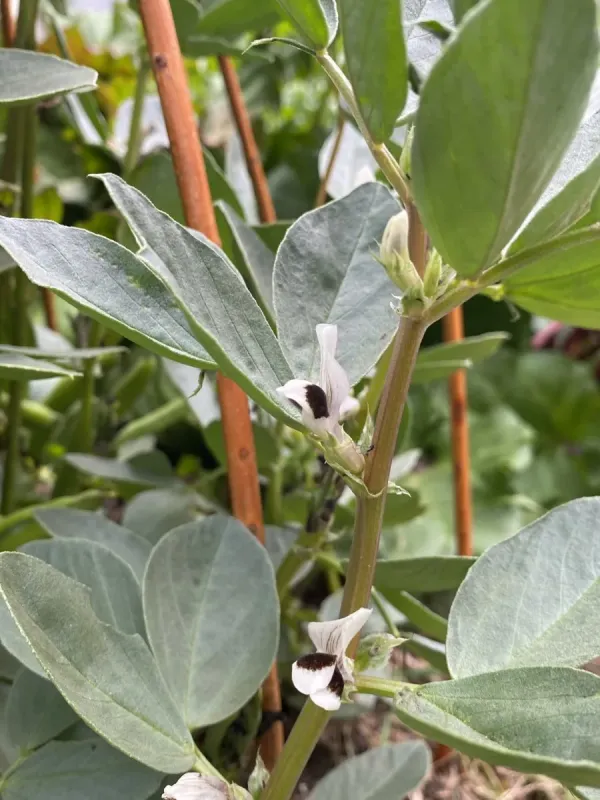
Description
Sowing dates
The small-seeded fava bean, scientifically known as Vicia faba L. var. minuta, belongs to the Fabaceae family. This annual crop is widely valued for its cold tolerance and nitrogen-fixing abilities, making it an excellent choice for early spring planting.
Sowing typically occurs in early spring as soon as the soil temperature reaches 3–5 degrees Celsius. Early establishment is crucial for the crop to develop a deep and resilient root system, allowing it to withstand the potential moisture deficits of early summer.
The seeds should be planted at a depth of 6 to 10 centimeters. This depth ensures proper moisture contact and protects the seedlings from early spring temperature fluctuations. A standard row spacing of 15–20 centimeters is recommended to maintain optimal plant density.
Seedbed preparation involves deep autumn plowing followed by spring harrowing to preserve moisture. A loose, well-aerated soil structure is essential for the crop to flourish, as compact soils often lead to restricted root growth and poor nodulation.
The seeding rate is determined by the thousand-kernel weight and the desired population density. Generally, aiming for 250,000 to 350,000 viable seeds per hectare ensures a competitive canopy that can effectively suppress weeds and maximize light interception.
Growing requirements
Small-seeded fava beans are moisture-demanding crops that perform best in temperate climates with well-distributed rainfall. The most critical period for water availability is during the flowering and pod-filling stages, where water stress can severely reduce yield.
The ideal soil for this crop is a fertile loam or clay-loam with a neutral to slightly acidic pH. While the plants are highly adaptive, they struggle in waterlogged or overly acidic conditions; therefore, proper drainage and lime application are necessary in some areas.
As a legume, this plant forms a symbiotic relationship with Rhizobium bacteria, which allows it to fix atmospheric nitrogen. This natural process reduces the need for synthetic nitrogen fertilizers, making it a sustainable and cost-effective crop for modern farms.
The crop prefers moderate temperatures, ideally between 18 and 22 degrees Celsius. High temperatures during flowering can cause flower abortion, which significantly decreases pod set. Providing a cool, favorable environment during this window is key to success.
Fertilizer management should prioritize phosphorus and potassium, which are essential for pod development and overall plant strength. Regular soil testing is recommended to ensure that these macronutrients are available in the correct proportions throughout the season.
Yield
The yield potential of small-seeded fava beans ranges from 2.5 to 4.0 tonnes per hectare, depending on soil quality, climatic conditions, and management intensity. Their reliable performance makes them a favorite among farmers seeking stable yields.
Beyond the grain production, these beans are highly valued for their high protein content, making them a premium ingredient in livestock feed formulations. The straw produced after harvest is also high in nitrogen, adding value to the agricultural system.
Rotation benefits are a major advantage of growing this crop. By incorporating fava beans into a cereal-dominated rotation, farmers can break pest cycles and enhance soil health, leading to increased yields in subsequent wheat or barley crops.
Weed management is a vital component of yield protection. Because the crop canopy develops slowly, early-season weed control using mechanical methods or selective herbicides is often necessary to prevent competition for nutrients and sunlight.
Strategic harvest management ensures that the crop is gathered at its peak quality. Ensuring that the grain is harvested without mechanical damage preserves its nutritional profile and market value, whether intended for feed or processing markets.
Main diseases and pests
Fava beans are susceptible to several fungal diseases, most notably Ascochyta blight and rust. These pathogens thrive in humid conditions, necessitating a proactive approach, including the use of certified disease-free seeds and fungicides when necessary.
Pest management focuses on several key insects that can devastate the crop if left unchecked:
- Pea and bean weevils, which cause damage to leaves and root nodules;
- Black bean aphids, which suck plant sap and transmit viral diseases;
- Bruchid beetles, which larvae tunnel directly into the developing seeds.
Integrated Pest Management (IPM) strategies, including the use of pheromone traps and biological controls, are highly effective. Monitoring fields for the presence of aphids and weevils allows for targeted chemical interventions only when required.
Prophylactic seed treatment is standard practice to guard against soil-borne pathogens during germination. This simple step significantly increases seedling survival rates and promotes more uniform crop establishment in the spring.
Spatial rotation is the most effective cultural method to reduce the prevalence of pests and diseases. Avoiding the planting of legumes on the same field more than once every four years prevents the build-up of specialized soil-borne organisms.
Harvesting
Harvesting is typically performed using combine harvesters once the plants reach physiological maturity. Indicators of maturity include the blackening of lower pods and the hardening of seeds to a moisture level below 18 percent.
Desiccation is often employed to ensure uniform maturity across the field, especially in uneven stands. This process allows the stems to dry down quickly, facilitating smoother operation of the combine harvester and reducing field losses.
Adjusting the combine harvester is critical. Operators should minimize drum speed and adjust concave settings to ensure that the small, sensitive seeds are not cracked or physically damaged during the threshing process.
Post-harvest cleaning is essential to remove dust, chaff, and other impurities from the grain. Effective cleaning reduces the risk of spoilage and prepares the beans for storage or immediate market sale, depending on moisture levels.
Storage should take place in clean, dry, and well-ventilated grain bins. Maintaining a moisture content of approximately 14 percent prevents the growth of molds and protects the protein-rich beans from infestation by storage pests during long-term storage.