
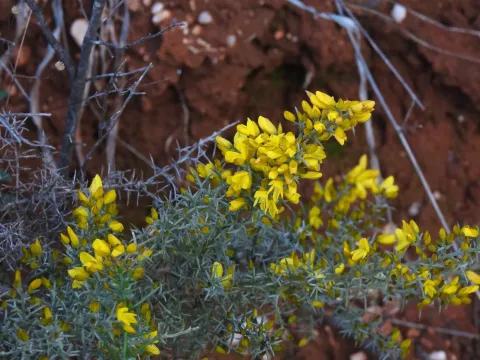
Silver gorse
Ulex argenteus
Silver gorse (Ulex argenteus) is a perennial shrub belonging to the Fabaceae family. Native to the Iberian Peninsula, this plant is well-adapted to Mediterranean environments characterized by rocky soils and limited water availability.
What the section contains
Silver gorse
As a legume, the plant is highly efficient in nutrient-poor environments, utilizing symbiotic bacteria to fix atmospheric nitrogen. It thrives in well-drained, sandy, or gravelly soils where other vegetation often struggles to establish.
Optimal growth requires full sun exposure, which is essential for stimulating flowering and maintaining the shrub's compact, dense architecture. Excessive shade leads to spindly growth and reduces the plant's natural resistance to environmental stress.
The plant demonstrates significant drought tolerance once established, thanks to its specialized root system and reduced leaf surface area. During the initial growth phase, consistent but sparse irrigation is needed to encourage deep root penetration.
Botanically, silver gorse features sharp, spine-like modified leaves and brilliant yellow flowers. Its structural properties make it an excellent choice for erosion control on slopes where soil stability is a priority.
Root rot, primarily caused by waterlogged soil, is the most common threat to the health of silver gorse. Ensuring a slope or raised bed for planting is critical to mitigate the risks of fungal pathogens accumulating in the soil.
Spider mites are common pests that thrive during hot, dry periods, potentially causing discoloration of the foliage. Regular monitoring is necessary to prevent significant infestation that could stunt plant development.
Aphids can also colonize young, succulent shoots, creating honeydew that serves as a medium for secondary fungal growth. Integrated pest management, focusing on biological controls, is preferred to maintain the plant's health.
Frost damage can compromise the structural integrity of the branches, making them more susceptible to decay. In colder climates, protective covering or mulching of the root zone is recommended during the dormant season.
Proper pruning is required to remove dead or diseased branches, which otherwise serve as reservoirs for diseases. Always use sterilized tools to minimize the transmission of pathogens between plants.