
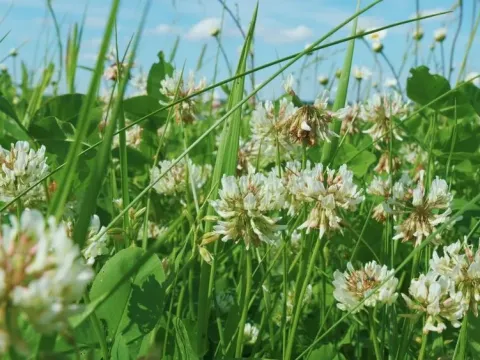
Alsike clover
Trifolium hybrids
Alsike clover, known by its scientific name Trifolium hybridum, is a valuable perennial legume. It is highly regarded for its ability to thrive where other clover species struggle, particularly in wet or acidic soils.
What the section contains
Alsike clover
The ideal time for seeding is early spring, which allows the plants to establish a strong root system before the onset of summer heat. Late autumn planting is also a viable option in many regions.
The seeding rate typically ranges from 8 to 12 kg per hectare when planted as a monoculture. In forage mixtures, this rate is adjusted downward to balance with companion grasses.
Due to the small size of the seeds, shallow sowing is mandatory, usually no deeper than 1–2 cm. Firming the seedbed after planting ensures the necessary moisture contact for successful germination.
The crop establishes relatively quickly and serves as an excellent companion in pasture mixtures with timothy or fescue. Its longevity in a field can span several productive years.
Alsike clover is famous for its exceptional tolerance to waterlogged conditions. It is frequently the crop of choice for poorly drained or periodically flooded fields where red clover would fail.
The plant is highly adaptable to a range of soil pH levels and is notably more tolerant of acidic soils than other legumes. It performs best on heavy, fertile loam and clay soils.
Climate-wise, it prefers cool and humid conditions. The plant is very winter-hardy, making it a reliable forage source in northern latitudes with harsh winter seasons.
While it can tolerate some shade, it produces the most biomass in full sunlight. Proper air circulation is beneficial to prevent fungal infections in densely growing stands.
Phosphorus and potassium are the primary nutrients required for optimal yields. As a legume, it fixes its own nitrogen, significantly improving soil fertility for subsequent crops in the rotation.
Yields of green biomass typically fall in the range of 20 to 30 tonnes per hectare. Variability is largely dependent on the soil moisture levels and local climatic conditions during the growing season.
Hay production can yield between 5 to 8 tonnes of dry matter per hectare with two cuttings. The quality of the hay is high, provided it is harvested at the right phenological stage.
Seed production is an important secondary use, with yields ranging from 200 to 400 kg per hectare. Successful seed harvest requires careful management of bee pollination.
Maximizing yield involves precise timing of the first cut. Harvesting at the early bloom stage ensures the best balance between biomass quantity and protein content in the forage.
Long-term yield stability is supported by proper grazing management. Avoiding overgrazing ensures the plants have enough reserves to regrow after each usage cycle.
Common diseases affecting Trifolium hybridum include powdery mildew and various leaf spot fungi. Maintaining healthy soil and proper crop rotation helps minimize these issues.
Insect pests, such as clover root curculio and aphids, can cause significant damage to the plant. Monitoring these populations during the spring is crucial for effective control.
Nematode pressure may increase in soil that stays wet for extended periods. Selecting resistant cultivars is one of the most effective ways to manage such soil-borne threats.
Integrated Pest Management (IPM) practices should be followed to protect beneficial pollinators. Chemical interventions should be avoided during the flowering phase of the clover.
Ensuring the crop remains vigorous is the best natural defense against weeds and pathogens. Healthy, well-fertilized clover stands are typically less prone to severe disease outbreaks.
Harvesting for forage should ideally occur at the beginning of the flowering period. This timing preserves the highest levels of nutrients and digestibility for livestock.
Drying the cut material requires careful handling, as the leaves tend to shatter if they become too dry during the baling process. Mechanical raking should be done when moisture is still present.
For seed production, the crop should be harvested when the majority of the flower heads have turned brown. Timely collection prevents seed shattering and ensures higher recovery rates.
Storage of the harvested hay must be in dry, ventilated areas. Excessive humidity in storage can lead to mold and potential spoilage, which could be toxic to horses and other livestock.
Field machinery should be cleaned after harvest to prevent the spread of weed seeds or pathogens. Properly stored Alsike clover remains a staple feed throughout the winter months.