
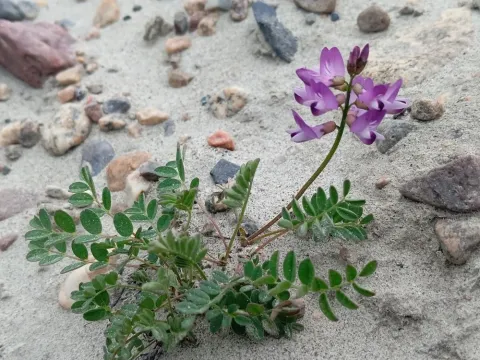
Alpine milkvetch
Astragalus alpinus
Alpine milkvetch (Astragalus alpinus) is a perennial herb belonging to the Fabaceae family. It is natively distributed across high-altitude and arctic regions, where it has adapted to survive extreme environmental conditions, including frost and nutrient-poor soils.
What the section contains
Alpine milkvetch
The botanical structure includes a deep taproot system, which serves for both water uptake and anchorage in unstable alpine environments. The plant is characterized by compound leaves and racemes of small, often colorful flowers that support biodiversity.
Regarding soil requirements, this crop thrives in well-drained, sandy or loamy soils. It prefers neutral to slightly alkaline pH levels and performs poorly in waterlogged environments, which inhibit the activity of nitrogen-fixing bacteria.
The plant plays a crucial role in nitrogen fixation. By establishing a symbiotic relationship with specific soil bacteria, it naturally fertilizes the soil, acting as a valuable tool for ecological restoration and improvement of degraded land.
Economically, Alpine milkvetch is recognized as a high-protein forage crop. Its ability to regrow after grazing or harvesting makes it a sustainable choice for livestock management in cold-climate regions where standard forage crops struggle.
Fungal infections, such as powdery mildew and rust, pose a significant risk to the crop under high-humidity conditions. These pathogens can cause defoliation and a drastic reduction in total biomass yield.
Weevil species are the primary insect pests affecting this crop. These insects attack the foliage and root systems, which can weaken the plant's structural integrity and its ability to fix atmospheric nitrogen.
Effective management includes maintaining proper planting density to ensure adequate air circulation. Preventing excessive moisture accumulation in the canopy is essential to minimize the risk of infection.
Weed control is vital during the establishment phase. Because Alpine milkvetch grows slowly initially, manual or mechanical weeding is often required to ensure that the seedlings obtain enough light and space to thrive.
The use of disease-resistant cultivars is highly recommended for commercial production. Regular field scouting helps identify early signs of infestation, allowing for prompt and targeted intervention to protect the stand.