
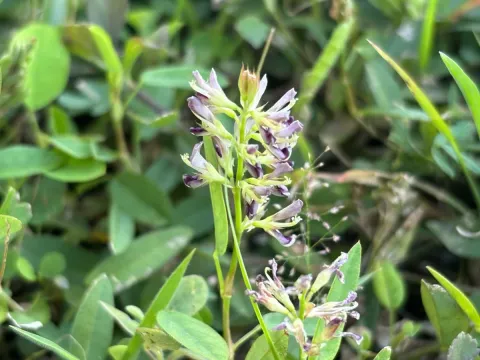
Alysicarpus
Alysicarpus Desv.
Sowing of Alysicarpus usually begins at the onset of the rainy season to ensure optimal moisture for germination and initial establishment of the crop.
What the section contains

Alysicarpus
Seeds are sown at a shallow depth of approximately 1 to 2 centimeters. Ensuring good contact between the seed and the soil is vital for uniform emergence.
Some growers practice scarification to break the seed coat dormancy, which significantly improves the germination rate and speed of stand establishment.
Seed rates can vary depending on the intended use, such as grazing, hay production, or as a cover crop for soil enrichment in larger plantations.
Light soil compaction after sowing is recommended to prevent the surface from drying out too quickly, especially in regions with high daily temperatures.
Alysicarpus is a genus within the Fabaceae family, highly adapted to tropical and subtropical climates where heat and consistent rainfall are prevalent.
The crop thrives in well-drained sandy or loamy soils. It has a remarkable ability to perform well in nutrient-poor soils due to its nitrogen-fixing symbiosis.
Waterlogging is detrimental to Alysicarpus, as it inhibits root development and can lead to fungal issues, therefore proper field drainage is absolutely essential.
It is a sun-loving plant that requires full exposure to thrive. Shade from taller trees or dense weeds significantly reduces its growth rate and biomass yield.
The plant demonstrates good tolerance to moderate drought conditions once it has fully established its deep root system, making it resilient in variable climates.
The biomass yield of Alysicarpus is largely influenced by soil fertility, moisture availability, and the specific variety being cultivated by the farmer.
In well-managed systems, it provides a high-quality, protein-rich forage for cattle, sheep, and goats, often performing better than native grasses.
The crop displays excellent regrowth potential, allowing for multiple harvests or managed grazing rotations throughout the main growing season.
Nutritionally, it is highly valued for its high protein content in leaves, which helps maintain milk production and livestock health in tropical regions.
Beyond its use as animal feed, Alysicarpus significantly boosts soil organic matter when incorporated as a green manure or left as crop residue.
Seedlings are particularly vulnerable to various soil-borne pests and chewing insects that can decimate the crop before it reaches the full vegetative stage.
Fungal pathogens such as powdery mildew or leaf spot diseases may appear during periods of high humidity or poor air circulation within the plant canopy.
Weed competition is the most significant threat during the first 3-4 weeks of growth, necessitating early manual or mechanical intervention to ensure success.
Root-knot nematodes are known to affect various legumes and can impede the nitrogen-fixing nodules of Alysicarpus, leading to visible stunted growth.
Integrated pest management strategies, including crop rotation and the use of resistant varieties, are recommended to maintain long-term production stability.
The ideal time for hay harvest is during the peak flowering stage, which ensures the best balance between biomass volume and nutritional quality.
For grazing purposes, rotational management is key to prevent overgrazing, ensuring that enough leaf area remains for rapid recovery after the livestock is removed.
Seed collection requires careful timing; harvest should occur as soon as pods change color but before they shatter and disperse seeds naturally into the field.
Proper drying of the harvested biomass is crucial to preventing spoilage and maintaining the nutritional value needed for winter feed or storage.
Post-harvest residues should be managed carefully, as they return nitrogen and organic carbon to the soil, improving the health of subsequent crops.