
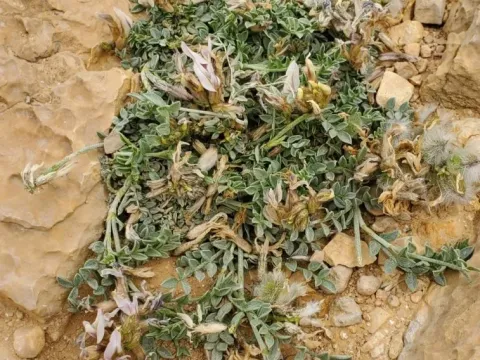
Amalekite milkvetch
Astragalus amalecitanus
Astragalus amalecitanus, commonly known as Amalekite milkvetch, is a perennial legume species characterized by its exceptional adaptability to arid and semi-arid environments. It serves as a vital component in ecosystems with limited water availability.
What the section contains
Amalekite milkvetch
The botanical structure of the plant features a deep taproot system, which allows it to thrive in nutrient-poor soils. The leaves are compound and typically covered with fine trichomes, serving as an adaptation to reduce transpiration during extreme heat.
This crop prefers well-drained, alkaline to neutral soil types. Its ability to thrive in degraded or saline soils makes it an ideal candidate for soil restoration projects in marginal lands where traditional crops fail.
Climatic requirements focus on high solar radiation and low relative humidity. The plant's physiological mechanisms ensure survival during prolonged dry spells, maintaining its productivity where other forage crops would suffer from drought stress.
In agricultural practice, it is primarily used as high-quality forage for livestock due to its significant protein content. Furthermore, its nitrogen-fixing capabilities contribute to the sustainability of the crop rotation cycles in which it is included.
The primary diseases affecting this species include powdery mildew and rust fungi, which tend to proliferate in conditions of high humidity or poor air circulation within dense plant stands.
Insect pests such as aphids and weevils pose a significant threat to the vegetative and reproductive parts of the plant. These pests can significantly reduce seed yields if not managed properly during the flowering stage.
Root rots caused by various soil-borne pathogens can impact the establishment of new stands. Proper site selection and avoiding waterlogged areas are critical preventive measures against such infections.
To maintain high productivity, farmers should employ an integrated pest management strategy that prioritizes cultural practices, such as choosing the right sowing density and maintaining proper crop hygiene.
Monitoring for signs of early damage is essential. Early intervention through biological control agents or targeted, low-toxicity pesticides helps in maintaining the health of the forage stands throughout the growing season.