
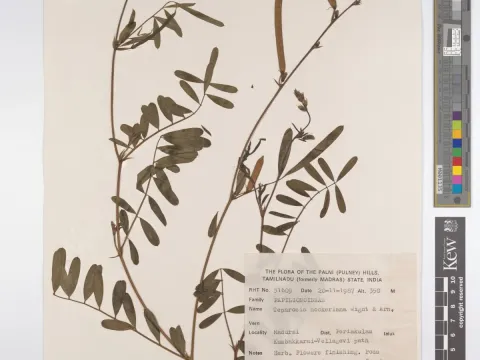
Tephrosia hookeriana
Tephrosia hookeriana
Tephrosia hookeriana is a perennial legume species valued for its soil-enriching properties and resilience in tropical environments. As a member of the Fabaceae family, it is recognized for its ability to fix atmospheric nitrogen, significantly contributing to soil nitrogen levels.
What the section contains
Tephrosia hookeriana
The plant thrives in warm, tropical climates with distinct wet and dry seasons. It requires full sunlight exposure to maintain robust growth and maximize its vegetative biomass, which is often used for green manure and soil cover.
Regarding soil requirements, Tephrosia hookeriana is adaptable to a wide range of soil textures, though it performs best in well-drained, slightly acidic to neutral soils. It avoids waterlogged areas where root health can be compromised.
Agrotechnical management involves maintaining clean cultivation to allow for initial establishment. Once established, the plant's dense foliage effectively outcompetes common weeds, reducing the need for mechanical or chemical weed control.
The rooting system of this species is deep and complex, which aids in soil stabilization and prevents erosion on sloped agricultural lands. This makes it a preferred plant for conservation agriculture practices in its native range.
Key threats include common leguminous pests such as pod borers and aphids. These insects can significantly affect biomass production and seed set if not monitored closely during the critical flowering stage of the crop.
Root rot diseases are prevalent in areas with high humidity and poor soil drainage. Implementing proper drainage systems and avoiding excessive irrigation are critical components of a successful disease management strategy.
Fungal leaf spots can occur during prolonged rainy seasons, leading to premature defoliation. Ensuring proper spacing between rows helps facilitate air movement, thereby reducing the humidity levels around the foliage.
Nematode infestation poses a hidden danger to the root system, potentially stunting growth and reducing the efficiency of nitrogen fixation. Crop rotation with non-host species is essential for mitigating this biological risk.
Agricultural management should prioritize monitoring for early signs of distress. Early detection of pest populations allows for targeted intervention, minimizing the need for broad-spectrum pesticide applications that could harm beneficial symbionts.