
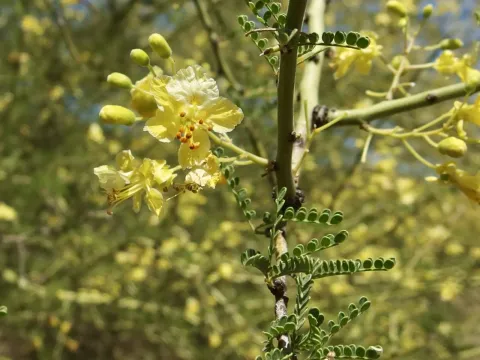
Parkinsonia sonorae
Parkinsonia sonorae
The propagation of Parkinsonia sonorae is primarily performed through seeds. Given the hard seed coat typical of the genus, scarification is required before sowing to break dormancy and ensure consistent germination rates.
What the section contains
Parkinsonia sonorae
The optimal sowing time is during the spring when soil temperatures remain consistently high. Seeds should be planted in well-drained, sandy, or loamy soil at a depth of approximately 2 to 3 centimeters.
Direct seeding in the field is recommended for establishing forest stands or windbreaks. This practice prevents root deformation, allowing the tree to develop a robust taproot system essential for survival in arid climates.
Soaking seeds in lukewarm water for up to 24 hours prior to planting can significantly improve the speed and uniformity of emergence by softening the seed coat.
Seedlings require moderate moisture during the initial establishment phase. Once the root system is established, supplemental irrigation can be drastically reduced or completely eliminated.
Parkinsonia sonorae is a member of the Fabaceae family, highly adapted to the harsh conditions of the Sonoran Desert. It thrives in regions with limited rainfall and high solar radiation.
The species prefers well-drained soils, including sandy, rocky, or gravelly substrates. It is known for its ability to grow in nutrient-poor soils where other tree species struggle to survive.
Full sun exposure is critical for the development of a healthy canopy. The plant does not tolerate excessive shade or waterlogged soil conditions, which are primary causes of tree decline.
The species is extremely heat-tolerant and is capable of enduring high summer temperatures. However, young trees may require protection from extreme winter frosts depending on the specific geographic region.
Agricultural management is minimal due to the species' ability to fix atmospheric nitrogen. It requires little to no fertilization, making it a cost-effective choice for arid land reforestation projects.
The economic value of this culture is based on its utility as a protective plant for soil conservation and biomass production. It serves as an effective barrier against wind and water erosion.
The leaves and young twigs provide supplemental forage for livestock in arid environments, serving as a vital nutritional source during peak dry seasons when other grasses are dormant.
The wood is dense and durable, often used for small-scale timber projects, artisanal crafts, and as a reliable source of high-energy firewood for local communities.
In agroecological systems, the tree acts as a soil improver. Through its symbiotic relationship with nitrogen-fixing bacteria, it helps restore fertility to depleted desert soils.
As a nectar-producing species, Parkinsonia sonorae supports local biodiversity and serves as an important resource for pollinators in otherwise barren desert environments.
The primary threat to the health of Parkinsonia sonorae is excessive soil moisture. Poor drainage leads to root rot and fungal infections, which are the leading causes of plant mortality in managed orchards.
While the tree is largely resistant to pests, it can occasionally be affected by foliage-feeding insects. These infestations are rarely fatal and usually do not require large-scale chemical control.
Preventative care involves ensuring the planting site has excellent drainage and avoiding over-irrigation. Maintaining healthy airflow around the canopy reduces the risk of fungal pathogens.
Mechanical damage to the trunk or branches can act as an entry point for diseases. Regular inspection and careful pruning help maintain the structural integrity and health of the tree.
Chemical intervention is seldom necessary, as the tree’s natural defenses are well-suited to its native environment, allowing for sustainable and low-input cultivation practices.