
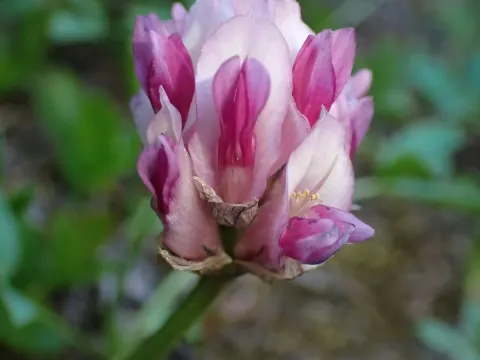
Parry's Clover
Trifolium parryi
Parry's Clover is a perennial herbaceous plant belonging to the Fabaceae family. It is native to the alpine and subalpine regions of the North American Rocky Mountains, thriving at high elevations above the treeline.
What the section contains
Parry's Clover
Botanically, it is characterized by its compact growth habit and a deep taproot, which allows the plant to access moisture and nutrients in harsh, rocky soil conditions. Its leaves are trifoliate, and the flowers typically display vibrant shades of rose-purple.
The plant requires well-drained, porous soils to prevent root rot, as it is highly sensitive to waterlogging. It is remarkably adapted to cold climates and survives extreme winter temperatures under a protective layer of snow.
In terms of agricultural management, Parry's Clover is valued primarily for its ecological role in nitrogen fixation. It acts as a soil builder in nutrient-poor alpine environments, supporting the development of surrounding vegetation.
Cultivation of this species is niche and generally focused on ecological restoration projects or specialized high-altitude range management. It does not require high levels of fertilization but is dependent on sufficient solar radiation.
The plant is susceptible to fungal diseases such as leaf spots, particularly in environments with poor air circulation or extended humidity. Root decay may occur if the soil structure remains saturated for too long.
Insect pests include various weevil species that specifically target the clover's seeds and flowering structures. Early detection is vital for preserving the reproductive capability of the plant in sensitive areas.
Overgrazing poses a significant threat to Parry's Clover populations, as high livestock density can compact the soil and physically damage the crowns of the plants. This reduces the vigor and sustainability of the pasture.
Competition from invasive mountain grasses can also suppress its growth if the meadow's nutrient balance is artificially altered. Management should focus on maintaining natural grazing pressure to ensure biodiversity.
Integrated pest management strategies for this clover are limited due to its alpine habitat. Maintaining a healthy soil ecosystem and preventing mechanical disturbances remain the most effective preventive measures.