
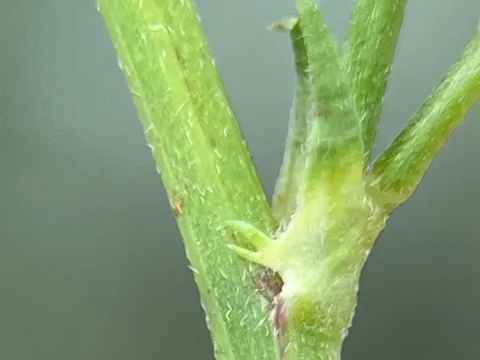
Medicago dentata
Medicago dentata
Medicago dentata, commonly known as dentate medic, is a hardy annual legume species valued for its adaptability in various agricultural systems. The sowing process begins with proper soil preparation, aiming for a fine seedbed to ensure maximum contact between the soil and the small seeds.
What the section contains
Medicago dentata
Sowing typically takes place in early spring, allowing the plants to establish a robust root system before the onset of hotter and drier conditions. Optimal seeding depth is crucial, generally ranging from 1 to 2 centimeters, to facilitate rapid emergence and prevent exhaustion of seed energy reserves.
In regions with mild winters, autumn sowing can also be successful, providing a head start for early spring growth. This method is often preferred to capitalize on winter moisture, ensuring that the crop is well-established before potential spring droughts occur.
Seeding rates are adjusted based on the intended use, whether for pure stands, pasture mixtures, or as a green manure crop. Utilizing precision seed drills helps maintain even distribution, which reduces competition between individual plants and leads to uniform crop development.
Following germination, the initial growth stage is critical. Farmers must monitor fields for weed pressure, as seedlings can be easily overwhelmed by fast-growing weeds during the first few weeks of development, necessitating timely mechanical or selective chemical intervention.
Dentate medic thrives in well-drained soils and shows a preference for neutral to slightly alkaline pH levels. It is remarkably tolerant of various soil textures, provided that waterlogging is avoided, as stagnant water can severely inhibit root respiration and nutrient uptake.
The plant is known for its moderate drought tolerance once established, thanks to its extensive root system. However, for maximum biomass production, sufficient moisture during the vegetative phase and the onset of flowering is essential to meet the plant's metabolic demands.
Exposure to sunlight is a major requirement for healthy growth. Being a sun-loving legume, it requires open, bright conditions to maintain high rates of photosynthesis. Shaded areas result in stunted development and reduced nutritional value of the foliage.
As a legume, it benefits significantly from the presence of compatible Rhizobium bacteria in the soil. In areas where the crop has not been previously grown, inoculation of seeds with specific nitrogen-fixing strains is a standard practice to ensure effective nodulation and nitrogen acquisition.
While the crop can perform well in moderate fertility soils, phosphorus and potassium are vital for root development and overall stand persistence. Soil testing is recommended to apply targeted amendments, ensuring that these essential nutrients are available during the peak growth months.
The primary agricultural utility of Medicago dentata lies in its high-protein forage value. When harvested at the late-bud or early-flowering stage, it provides a highly palatable and nutritious feed for livestock, supporting efficient weight gain and milk production.
The crop demonstrates strong regrowth potential, which is highly advantageous for rotational grazing systems. By allowing sufficient rest periods between grazing cycles, producers can maximize the cumulative yield of green mass over the course of a single growing season.
When used as a green manure, the crop effectively improves soil structure and nitrogen content. Incorporating the biomass into the topsoil accelerates the release of organic nitrogen, which benefits subsequent grain or vegetable crops in the rotation cycle.
Seed production is another aspect of its commercial value. Harvesting must be timed precisely when the pods mature but before they shatter. Proper combine settings are required to minimize field losses, ensuring that a sufficient quantity of high-quality seeds is collected.
In terms of forage quality, the leaves are the most nutrient-dense part of the plant. Management strategies that prioritize the retention of leaf area during the mowing process help maintain the overall quality of the harvested hay or silage.
Fungal diseases, particularly those affecting the roots and stems, represent the main biotic threat, especially under conditions of high humidity and poor soil drainage. Maintaining proper crop hygiene and choosing resistant varieties are the primary methods for managing these risks.
Insect pests, such as weevils, can significantly impact both vegetative growth and seed production. Monitoring programs that trigger timely, targeted pesticide applications only when economic thresholds are met are essential for sustainable pest management.
Competition from annual grasses and broad-leaved weeds is a persistent challenge during the stand establishment phase. Integrated weed management, including competitive planting densities and mechanical weeding, is necessary to ensure the medic dominates the field.
Environmental stressors, such as late frost or extreme heatwaves, can impact yield. While the plant is inherently resilient, healthy crops that are well-nourished and not stressed by overgrazing show better recovery and survival rates after adverse weather events.
Overgrazing poses a significant risk to the longevity of the stand. Continuous high-intensity grazing depletes the root reserves, preventing the plant from recovering efficiently, which may lead to the gradual decline of the stand over several seasons.