
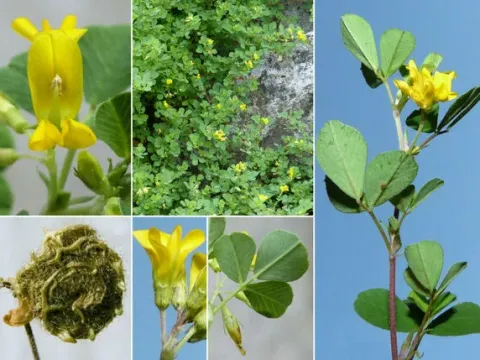
Pirona alfalfa
Medicago pironae
Pirona alfalfa (Medicago pironae) is a perennial legume species that requires thorough seedbed preparation to ensure uniform establishment. Sowing should ideally occur in early spring when soil moisture is sufficient to support consistent germination.
What the section contains
Pirona alfalfa
Seeds should be planted at a shallow depth of approximately 1 to 2 centimeters to maximize emergence rates. Maintaining optimal plant density is crucial to prevent internal competition and ensure that the stand remains vigorous throughout its multi-year lifespan.
The soil temperature at the time of sowing should ideally reach at least 8–10 degrees Celsius to promote rapid initial growth. Delaying sowing until soil conditions are stable helps avoid potential damage from erratic early-season frosts.
Post-sowing compaction of the soil surface is recommended to facilitate capillary water movement to the seed zone. This technique is particularly effective in drier regions where moisture retention in the topsoil is a limiting factor for seedling success.
It is important to manage weed pressure during the seedling stage, as Pirona alfalfa exhibits relatively slow initial growth. Proper herbicide management or mechanical weeding in the first season can significantly impact the long-term productivity of the stand.
This species thrives in well-aerated soils with a neutral to slightly alkaline reaction. It does not tolerate waterlogged conditions, making proper field drainage an essential requirement for its long-term health and survival.
Pirona alfalfa is noted for its adaptability to drought conditions once established, thanks to its deep-reaching taproot system. This biological trait allows it to sustain growth during dry summer months when other shallow-rooted species may go dormant.
Sunlight is a primary requirement for this crop, as it demands high photosynthetic rates to accumulate biomass and root reserves. Fields should be situated in open areas free from overhead shading to maximize yield potential.
Regarding nutrient requirements, this crop benefits from adequate phosphorus and potassium levels in the root zone. As a nitrogen-fixing legume, it relies on symbiotic bacteria, making healthy soil microbial activity a fundamental aspect of its nutrition.
The climate adaptation of this plant includes tolerance to cold winter temperatures, provided that soil moisture does not reach saturation. Stable winter dormancy is encouraged by proper field management during the autumn hardening phase.
The primary threats to the health of this crop include soil-borne pathogens such as Fusarium species, especially in poorly drained areas. Root rot is a common symptom of over-saturation, which can lead to rapid stand thinning.
Insect pests, including various species of weevils and aphids, pose a constant challenge to biomass production. These pests can cause direct damage to the foliage and may also serve as vectors for various plant viruses that reduce crop vigor.
Foliar diseases, such as leaf spot, can occur during periods of high humidity and restricted airflow within the canopy. Regular harvesting serves as a management tool to remove infected plant parts and lower the local inoculum pressure.
Effective pest management relies on early scouting and identification of infestation hotspots. Integrated pest management strategies, combining biological controls and selective chemical interventions, are recommended for maintaining field health.
Crop rotation remains the most critical strategy for minimizing the build-up of specific pests and diseases in the soil. Moving the production to a new field after several years of cultivation helps reset the disease pressure.