
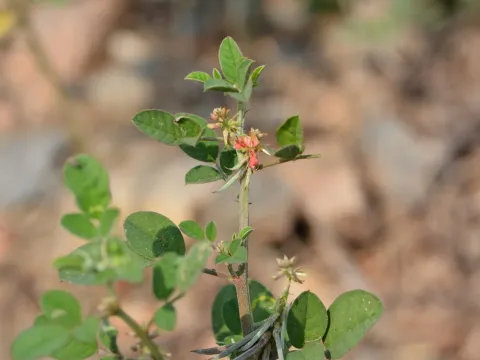
Indigofera trita
Indigofera trita
Indigofera trita is a perennial herb or subshrub belonging to the Fabaceae family. Known for its resilience, this crop is gaining attention in sustainable agriculture due to its role in soil improvement and low-input farming systems in arid regions.
What the section contains
Indigofera trita
Originating from the tropical and subtropical regions of Asia, Africa, and Australia, this plant is naturally adapted to high temperatures and sporadic rainfall. It thrives in diverse landscapes, from open scrublands to disturbed agricultural sites, demonstrating impressive environmental plasticity.
The crop prefers well-drained, sandy or loamy soils. One of its most significant agricultural assets is its ability to perform nitrogen fixation in symbiosis with rhizobia, which naturally enriches the soil and reduces the need for synthetic nitrogen fertilizers in subsequent crop rotations.
Cultivation practices should emphasize minimal soil disturbance to preserve the structural integrity of the field. Indigofera trita does not tolerate waterlogging, so fields must be selected with adequate drainage to prevent root rot and other physiological stressors.
Beyond its use as a cover crop, Indigofera trita serves as a supplemental forage source in subsistence livestock systems. Its protein-rich foliage provides essential nutrients during the dry season when traditional pasture grasses become scarce.
The primary threats to Indigofera trita include fungal pathogens like powdery mildew, particularly when humidity levels remain high for extended periods. Proper spacing is essential to ensure air circulation and mitigate these outbreaks.
Pests such as thrips, aphids, and bean weevils can cause substantial economic damage by feeding on the tender shoots and developing seed pods. These insects reduce both the biomass yield and the quality of the seed bank for future seasons.
Integrated Pest Management (IPM) strategies are highly recommended for this crop. Encouraging beneficial predatory insects and practicing crop rotation are far more effective and sustainable than the prophylactic use of broad-spectrum insecticides.
Soil-borne diseases such as root rot can occur if fields are improperly irrigated. Farmers should monitor the soil moisture levels carefully, as the plant is specifically adapted to periods of water deficit and does not require constant irrigation.
Effective management includes regular monitoring of leaves and roots for signs of chlorosis or stunted growth, which often serve as early indicators of either nutrient imbalances or the onset of pest infestations.