
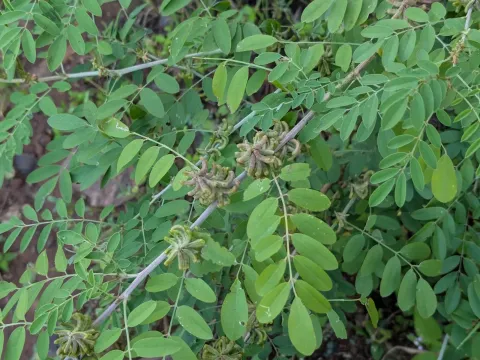
Indigofera suffruticosa
Indigofera suffruticosa
Sowing Indigofera suffruticosa requires a well-prepared seedbed and warm conditions. Because the seeds have a hard, water-resistant coat, they are typically scarified or soaked in warm water for several hours before planting to ensure uniform germination.
What the section contains
Indigofera suffruticosa
In field production, seeds are sown in rows spaced approximately 50 to 60 centimeters apart. This spacing allows for proper airflow and root development, which are essential for producing a robust plant capable of high vegetative yields.
The optimal planting depth is about 2 centimeters. Maintaining soil moisture during the germination phase is critical, as the small seedlings are sensitive to surface crusting and desiccation in the early stages of growth.
Initial growth is relatively slow, making weed control a primary concern for growers. Frequent weeding during the first month is necessary to ensure that the young indigo plants are not outcompeted for nutrients and sunlight.
Choosing a location with full sun exposure is vital for the development of the plant's metabolic precursors, which are later converted into dye. Shaded areas will significantly reduce both biomass production and pigment quality.
Indigofera suffruticosa is a perennial subshrub belonging to the Fabaceae family. It is native to tropical regions of the Americas and has been historically cultivated as one of the most reliable sources of natural blue indigo dye.
This crop thrives in hot, humid climates with temperatures ranging from 22 to 30 degrees Celsius. It is highly sensitive to frost, which can kill the plant; therefore, cultivation is generally restricted to tropical and subtropical zones.
The plant performs best in fertile, deep, and well-drained soils. While it can adapt to various soil types, waterlogged conditions must be avoided as they inhibit nitrogen fixation and encourage root rot pathogens.
Like many legumes, it possesses a symbiotic relationship with nitrogen-fixing bacteria. This capability allows the plant to improve soil health, making it an excellent candidate for sustainable cropping systems in tropical agricultural regions.
Although it possesses a degree of drought tolerance once established, consistent soil moisture is essential for maximizing leaf production. Regular irrigation is recommended during dry spells to sustain high yields throughout the growing season.
The harvest focuses on the vegetative foliage, as this is where the indigo precursor is most concentrated. Harvesting is typically timed to coincide with the early flowering stage when the pigment content in the leaves is at its peak.
Plants are cut back to about 15 centimeters above the soil line. This pruning method encourages the plant to regrow rapidly, allowing farmers to obtain multiple cuttings per season under optimal tropical conditions.
The fresh biomass must be processed quickly after harvest to prevent decomposition. The extraction process involves steeping the leaves in water, allowing for fermentation, oxidation, and finally the precipitation of the dye powder.
Post-harvest management includes moderate fertilization to promote quick recovery of the bushes. Proper nutrient management ensures that the plant maintains its vigor and produces high-quality foliage in subsequent cuttings.
Harvesting should ideally take place in the early morning to minimize moisture loss and heat stress on the plants. Efficient transport and immediate processing are essential to maintain the integrity of the dye-producing enzymes.
Fungal diseases are a primary concern, particularly during the wet season. Root rot and various leaf spot diseases can severely impact productivity if drainage is inadequate or if plant density is too high.
Insect pests, specifically various caterpillars and leaf-eating beetles, can cause significant damage to the foliage. Regular scouting is required to identify infestations before they cause widespread defoliation of the crop.
Aphids can also colonize the growing tips, causing distortion and stunted growth. Integrated pest management strategies, including the use of biological controls or selective insecticides, are often employed to keep pest populations at bay.
Good cultural practices, such as proper spacing to facilitate air circulation, are the best defense against disease outbreaks. Removing and destroying heavily infected plants can help prevent the spread of spores throughout the field.
Crop rotation is recommended to break pest and disease cycles. Moving the plantation to a new site every few years prevents the accumulation of soil-borne pathogens and helps maintain long-term farm productivity.