
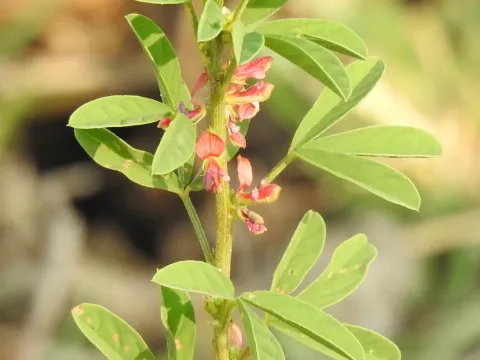
Indigofera trifoliata
Indigofera trifoliata
Indigofera trifoliata is a leguminous herb belonging to the Fabaceae family, recognized for its role in sustainable tropical agriculture. This plant is known for its resilience and ability to thrive in various environmental conditions.
What the section contains
Indigofera trifoliata
Sowing typically begins at the onset of the wet season, as moisture is essential for initial germination and seedling development. Timely planting ensures the crop establishes deep roots before the drier periods arrive.
Due to the hard coat of the seeds, scarification is often recommended before planting to improve germination rates. Sowing in rows with adequate spacing facilitates weed control and management during the early growth stages.
Seeds should be placed at a depth of approximately 1 to 2 centimeters to ensure good contact with the soil while allowing for rapid emergence. Uniform planting density is crucial for maximizing biomass production.
As a legume, it forms symbiotic relationships with nitrogen-fixing bacteria. Inoculating the seeds with appropriate rhizobium strains prior to sowing significantly enhances the plant's nitrogen-fixing efficiency and overall yield.
This crop prefers full sunlight exposure and performs best in open environments. Shaded areas significantly inhibit growth, leading to weak, spindly stems and lower yields of leafy biomass.
Indigofera trifoliata is adaptable to diverse soil types, including sandy, gravelly, and low-fertility soils. Proper drainage is essential, as the plant is sensitive to waterlogging, which can cause root rot.
The optimal temperature range for this species is between 20 and 30 degrees Celsius. Being a tropical plant, it cannot tolerate frost and requires warmth to achieve its potential growth rate throughout the season.
While relatively drought-tolerant once established, consistent moisture during the vegetative stage is vital. The plant’s root system allows it to survive intermittent dry spells, but prolonged water stress should be avoided.
Agricultural management requires early-stage weeding, as the crop is initially slow-growing and can be outcompeted by aggressive weeds. Once the canopy closes, the plant effectively shades out surrounding competition.
The primary use of Indigofera trifoliata is as a high-protein fodder source for livestock. Its palatability and nutritional content make it an excellent choice for improving cattle and sheep diets.
It is also widely utilized as a green manure crop. By incorporating the biomass into the soil, farmers can significantly boost organic matter content and nitrogen levels, promoting the health of the soil profile.
Biomass production is determined by the frequency of harvesting and the availability of water. Under optimal conditions, the plant can produce multiple cuts per season, providing a steady supply of fodder.
The plant acts as an effective soil cover, helping to prevent erosion on hilly terrains. Its robust root structure helps anchor the soil, protecting against runoff during heavy tropical rainfalls.
Seed production is an important secondary benefit. The plant yields numerous pods, allowing for sustainable seed collection and the easy expansion of cultivated areas for future seasons.
Fungal diseases, particularly leaf spots, can be a major challenge during humid and wet weather conditions. If left unmanaged, these infections can cause premature leaf drop and reduce fodder quality.
Various insect pests, such as weevils and larvae, can damage foliage and developing pods. Regular monitoring of the field is necessary to implement control measures before significant damage occurs.
Root-knot nematodes present a hidden danger that impairs nutrient uptake and reduces plant vigor. Rotating crops is a key preventive strategy to manage nematode populations in the soil.
Viral infections transmitted by aphid vectors can occasionally cause stunted growth and leaf deformation. Maintaining field hygiene and controlling carrier insects helps mitigate these threats.
- Rotate Indigofera with non-host crops to break pest cycles.
- Use certified healthy seeds to avoid initial disease transfer.
- Ensure adequate ventilation in fields to reduce fungal risk.
Harvesting for fodder is best performed at the early flowering stage. At this phase, the plant offers the best balance of protein content and biomass volume for livestock consumption.
When cutting, it is essential to leave a portion of the stem above the ground to facilitate regeneration. This practice ensures quicker regrowth for subsequent harvests, maximizing total annual yield.
For seed collection, harvesting should occur when the pods turn dark and reach full maturity. Delaying harvest too long may lead to pod shattering and significant loss of seeds in the field.
After mowing, the biomass can be grazed directly or turned into hay or silage. Proper drying is crucial if the material is intended for storage, preventing spoilage and maintaining quality.
Stored seeds must be kept in a cool, dry environment to maintain high germination rates. Moisture-proof containers are essential to protect the harvest from pests and environmental degradation.