
Hairy broom
Cytisus villosus
Description
Sowing dates
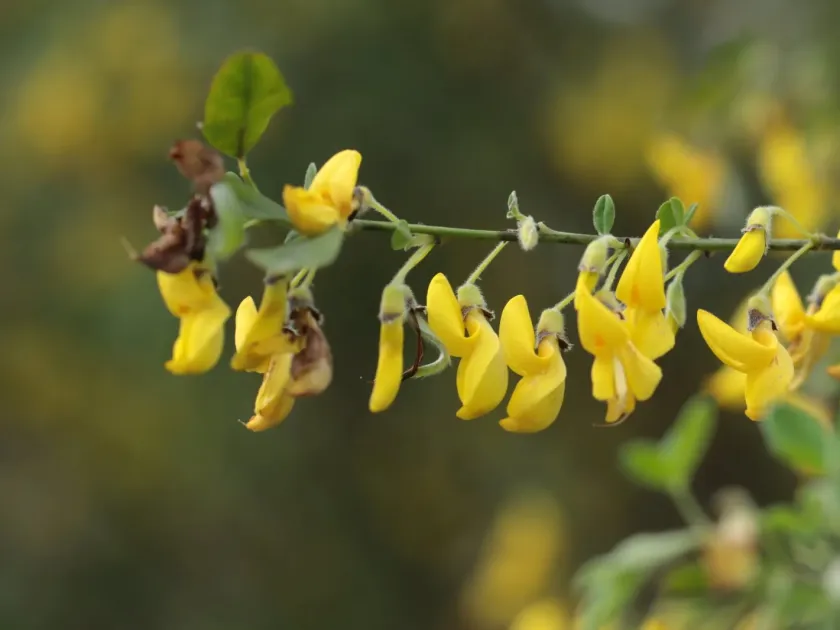
The Hairy Broom (Cytisus villosus) is a perennial shrub belonging to the Fabaceae family. It is characterized by its distinct hairy shoots and leaves, which serve as an adaptation to minimize transpiration in arid environments.
Seeds are typically sown in early spring after the risk of severe frost has passed. Pre-treatment of seeds, such as scarification or stratification, significantly improves germination rates by softening the hard seed coat.
In cultivation, seeds are sown in drills with a spacing of about 50–60 cm to allow sufficient air circulation. The optimal sowing depth is shallow, usually around 1 cm, ensuring the seeds are lightly covered with loose, fertile soil.
Vegetative propagation via softwood cuttings taken in early summer is also a common practice. This method ensures that the offspring maintain the exact characteristics of the parent plant, facilitating faster establishment.
Young plants require consistent monitoring during the first growing season. While mature plants are drought-tolerant, establishing a strong root system in the first year is vital for future survival.
Growing requirements
Cytisus villosus thrives in full sunlight. Exposure to direct sunlight is essential for the plant to achieve its maximum density and produce the abundant yellow flowers characteristic of the species.
The plant performs best in sandy or well-drained loamy soils. It possesses high tolerance for poor, nutrient-deficient soils, partly due to its ability to fix atmospheric nitrogen through symbiotic bacteria on its roots.
Soil pH should ideally be neutral or slightly acidic. In very alkaline soils, the plant may experience iron chlorosis, which can be mitigated by applying chelated iron or organic soil amendments.
Regarding climate, the Hairy Broom is well-adapted to Mediterranean-type climates with warm, dry summers and mild winters. It demonstrates remarkable resilience against water scarcity once established.
Excessive soil moisture is detrimental to the plant. Ensuring excellent drainage is more important than regular irrigation, as the root system is highly prone to rot if kept in saturated conditions.
Yield
The primary use of Cytisus villosus is in soil stabilization and erosion control. Its deep, anchoring root system is invaluable for maintaining slopes and preventing the loss of topsoil in hilly terrains.
As a nitrogen-fixing legume, it is frequently used in ecological restoration projects to improve soil fertility for subsequent plant species, acting as a pioneer or nurse plant in degraded landscapes.
The shrub is highly valued by beekeepers as an early-season nectar source. It provides essential forage for pollinators when few other food sources are available, contributing to the overall biodiversity of the ecosystem.
In addition to its ecological benefits, it serves an ornamental purpose in gardens and xeriscaping. Its unique, textured foliage and vibrant flowering period make it a popular choice for low-maintenance landscaping.
With minimal intervention, a stand of Hairy Broom can remain productive for many years, acting as a sustainable component of integrated land management systems.
Main diseases and pests
Aphids are the most common pests affecting the Hairy Broom. They feed on the succulent tips of young shoots, potentially stunting growth and acting as vectors for viral plant diseases.
Powdery mildew is a frequent fungal threat, particularly in regions with high humidity or poor air circulation. Proper spacing of plants is the most effective preventative measure against this fungus.
Root rot, specifically caused by overwatering or soil compaction, is a critical issue. It often leads to sudden wilting and death, which is irreversible; therefore, prevention through site selection is paramount.
To control pest outbreaks, integrated pest management (IPM) practices are recommended, focusing on biological controls before resorting to chemical insecticides, which could harm visiting pollinators.
Routine inspection for leaf discoloration or wilting branches should be part of the seasonal maintenance program to ensure early detection and management of potential health issues.