
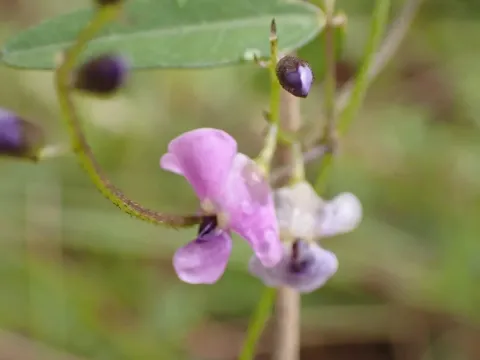
Glycine microphylla
Glycine microphylla
Glycine microphylla, a member of the Fabaceae family, is a perennial legume that requires careful sowing practices for optimal establishment. Seeds should be sown in late spring when the soil temperature consistently reaches 18–22 degrees Celsius.
What the section contains
Glycine microphylla
A shallow planting depth of approximately 2–3 centimeters is recommended to ensure proper germination. The soil should be well-prepared and pulverized to promote good seed-to-soil contact, which is vital for moisture uptake.
For greenhouse or nursery production, seeds can be started in early March. This approach provides an advantage in regions with shorter growing seasons, allowing for earlier transplanting into the open field once frost risks have passed.
Row spacing should be maintained between 45 and 60 centimeters to facilitate adequate air circulation and light penetration. Proper spacing also makes mechanical weeding easier during the early stages of growth.
Firming the soil after sowing using rollers helps retain moisture in the seedbed. This is a critical step in achieving high field emergence rates and uniform plant development across the field.
This crop thrives in sunny, open locations with protection from strong prevailing winds. Adequate sunlight is essential for biomass production, as shading can significantly hinder the plant's overall development.
Regarding soil preferences, Glycine microphylla performs best in well-drained loamy or sandy soils. It is sensitive to waterlogging, so ensuring good drainage is a prerequisite for long-term survival of the crop.
Consistent but moderate watering is necessary during the active growing season. The soil should be kept moist but not saturated, as prolonged water retention can lead to root system decay and foliage loss.
Fertilization should prioritize phosphorus and potassium to strengthen the root system. As a legume, it forms a symbiotic relationship with nitrogen-fixing bacteria, reducing the need for heavy nitrogen-based fertilizers.
Weed management is vital during the early growth phase. Regular cultivation between rows helps prevent weeds from competing for sunlight, nutrients, and moisture, ensuring the crop remains healthy.
The economic value of Glycine microphylla is largely derived from its biomass yield, which serves as a nutrient-rich forage. The plant's ability to regenerate quickly allows for multiple cuttings during one season.
Total yield is dependent on proper management practices, including timely irrigation and soil fertility maintenance. When provided with optimal conditions, the crop can reach significant productivity levels.
Regrowth rates after harvesting are generally high, provided the plants are not cut too low. A cutting height of 5–7 centimeters is recommended to preserve the plant's crown and encourage vigorous recovery.
The nutritional quality of the forage, particularly its protein content, makes it a desirable crop for livestock farmers. Proper harvest timing ensures that the maximum nutritional value is captured.
Integrating this crop into broader agricultural rotations improves soil structure and nitrogen content. This makes the plant not only a productive crop but also a beneficial component of sustainable land management.
Common pests include aphids and various leaf-chewing beetles that can cause significant foliage damage if left unchecked. Early detection through regular crop scouting is essential for effective intervention.
Fungal diseases, such as powdery mildew, often occur during periods of high humidity or poor air circulation. Proper plant spacing and avoiding excessive moisture help to create an unfavorable environment for pathogens.
Root rot remains a risk in poorly drained soils. Preventive measures include selecting well-drained sites and ensuring that planting depth and watering schedules are properly regulated to avoid moisture stress.
Integrated pest management strategies should be employed to control outbreaks. This includes the judicious use of approved insecticides and biological controls to protect beneficial insect populations.
- Monitoring for pest populations regularly during the early growth phase.
- Improving site drainage to prevent soil-borne diseases.
- Maintaining field sanitation by removing crop residues that harbor pathogens.
Harvesting for forage should ideally occur at the budding or early flowering stage to achieve the highest protein concentration. Delaying the harvest leads to stem lignification and a decrease in digestibility.
Mechanical harvesting must be performed with sharp equipment to ensure clean cuts. This prevents damage to the root collar and promotes rapid regrowth for subsequent cuts within the same year.
When harvesting for seeds, farmers must wait until the pods reach full maturity and change color. The process must be carried out in dry weather to prevent pod shattering and minimize seed loss.
Post-harvest handling is critical to ensure the quality of the harvested biomass. Quick drying or ensiling is necessary to prevent spoilage and maintain the forage's nutritional value during storage.
Systematic harvest management is the key to maintaining a productive and profitable field. Proper timing and technique ensure that the plant retains its vigor across multiple growing seasons.