
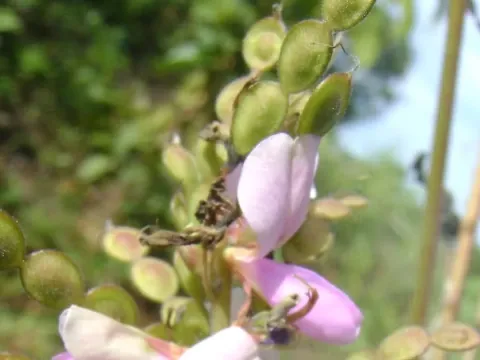
Desmodium leiocarpum
Desmodium leiocarpum
Desmodium leiocarpum is a perennial woody or shrubby plant belonging to the Fabaceae family. It is recognized for its robust root system and its ability to thrive in tropical and subtropical environments, making it a valuable candidate for various agricultural systems.
What the section contains
Desmodium leiocarpum
The sowing schedule is primarily dictated by the arrival of the rainy season, as high soil moisture is essential for germination. Farmers typically prepare the site well in advance, ensuring that the soil is sufficiently warm to support early seedling development.
Successful establishment often involves pre-sowing treatments like scarification to break seed dormancy. Once the seeds are prepared, they are sown in rows to ensure uniform growth and to facilitate subsequent field maintenance operations like weeding and fertilizing.
In the initial weeks, young seedlings grow at a moderate rate, requiring careful observation to ensure they are not outcompeted by weeds. After the root system establishes, the plant accelerates its growth and begins to accumulate significant biomass.
The choice of planting density depends on the end goal: lower density is preferred for pasture establishment, whereas higher density is used for silage or green forage production. Proper spacing is key to maintaining a healthy and productive crop stand.
This crop prefers well-drained soils with a pH ranging from neutral to slightly acidic. While it displays some resilience on low-fertility soils, it performs optimally on loamy soils that are rich in organic matter, which enhances its overall nutrient uptake.
Climate is the most critical factor for successful cultivation, as the species is highly sensitive to frost. It thrives in tropical and subtropical zones where temperatures remain stable and high throughout the year, supporting continuous growth.
Desmodium leiocarpum exhibits moderate drought tolerance, which is beneficial in regions with seasonal rainfall patterns. However, sustained productivity during the dry season may require supplementary irrigation to prevent plant stress and biomass loss.
Sunlight is vital for this light-loving plant; therefore, cultivation sites should be open and free from heavy shading. Inadequate light exposure can lead to stunted growth and reduced nitrogen-fixing capacity, impacting the overall health of the stand.
Agricultural management should include regular applications of phosphorus and potassium-rich fertilizers. These elements are essential for stimulating root development and supporting the activity of nitrogen-fixing bacteria, which in turn benefits the entire field.
The primary use of this crop is the production of green forage, which is prized for its high protein content. It serves as an excellent livestock feed, particularly in areas where other protein-rich forage options are either scarce or expensive to cultivate.
In addition to its feed value, the plant is widely utilized in agroforestry and sustainable farming as a cover crop. By fixing atmospheric nitrogen, it enriches the soil, thereby reducing the need for synthetic nitrogen fertilizers in subsequent crop cycles.
The yield of green biomass is generally high and can be harvested multiple times within a single growing season. Proper management practices allow farmers to maximize forage output while simultaneously improving the structural integrity of their agricultural lands.
Desmodium leiocarpum is also highly effective in erosion control, as its deep and spreading root system anchors the soil on slopes. This makes it an ideal choice for restoring degraded lands or protecting fertile topsoil from heavy tropical rain runoff.
Processed biomass can be converted into high-quality silage or leaf meal, offering a way to store valuable nutrients for periods of low growth. This versatility makes it a reliable asset for livestock farmers seeking to maintain consistent nutritional standards.
Fungal diseases represent one of the most common threats, especially during periods of excessive rainfall. These pathogens can attack leaves and stems, significantly reducing both the quantity and the nutritional quality of the forage harvest.
Insect pests, including various leaf-eating beetles and weevils, can cause localized damage to the crop. Regular monitoring and integrated pest management are crucial to preventing major outbreaks that could weaken the plant's structural integrity.
Managing weed competition is essential in the early stages of crop development, as the plant can be sensitive to overcrowding by aggressive weeds. Maintaining optimal field conditions helps the crop gain the dominance needed to suppress future weed populations.
Nematode infestations can pose a risk in fields where the crop is continuously grown without adequate rotation. Using high-quality, clean seeds and ensuring proper soil health are fundamental preventive measures against these below-ground threats.
Integrated pest management strategies that emphasize preventive measures, such as timely harvesting and good drainage, effectively reduce the reliance on chemical pesticides. This promotes an environmentally friendly approach to managing the crop's health.
The optimal harvest window is at the onset of flowering or during the budding stage, when nutrient density is at its peak. Delaying the harvest beyond this point typically results in increased lignification and a decrease in the digestibility of the forage.
Mechanical harvesting should be carried out at a carefully calculated height to prevent damaging the basal buds. This practice ensures quick recovery and robust regrowth, allowing for multiple productive cuttings per year under favorable conditions.
Harvested green material should be promptly transported or dried to maintain its nutritional integrity. Efficient post-harvest handling is critical to minimize nutrient loss and ensure that the final feed remains palatable and rich in vitamins for the livestock.
For seed production, the plants should be left until the pods are fully mature and dry. A precise harvest timing is necessary to avoid seed shattering, which is a common challenge for this species when waiting for full pod maturation.
Residual plant material left after harvesting can be incorporated back into the soil as green manure. This practice adds substantial organic carbon and nitrogen to the soil, supporting a sustainable cycle of soil fertility and improved land productivity.