
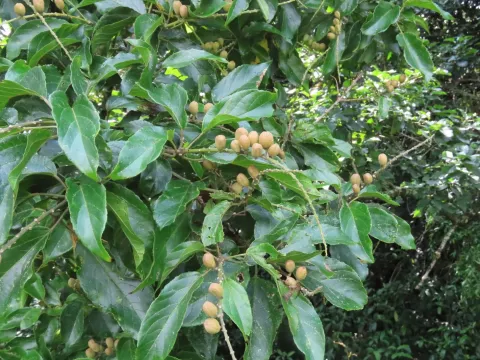
Forest croton
Croton sylvaticus
Forest croton (Croton sylvaticus) is a prominent evergreen tree species belonging to the Euphorbiaceae family. Renowned for its rapid growth rate, this tree can reach heights of 25 meters, providing significant canopy cover in its native tropical ecosystems.
What the section contains
Forest croton
The species is indigenous to the tropical and subtropical regions of Africa, notably spreading across diverse landscapes from South Africa to Mozambique. It naturally thrives in riparian zones, forest fringes, and moist areas that offer consistent environmental stability.
In terms of agricultural requirements, the species flourishes in deep, fertile soils that provide excellent drainage. While it is adaptable to various soil types, the exclusion of waterlogged conditions is paramount to prevent root asphyxiation and encourage healthy root expansion.
The climate requirement is strictly tropical, as the tree exhibits no cold tolerance and is highly susceptible to frost damage. Consistent temperatures above 20°C throughout the year are essential for the metabolic processes that support its extensive foliage production.
The economic utility of forest croton is broad and includes the extraction of bioactive compounds for pharmaceutical research and traditional healing. Furthermore, the tree is a source of high-quality timber, favored in local carpentry for its durability and resistance to common wear.
Forest croton maintains moderate resistance to typical agricultural pests due to the toxic, milky latex found within its stems and leaves. However, monoculture plantations may occasionally struggle with fungal leaf spots during seasons of excessive rainfall and humidity.
Pest management should focus on monitoring for sap-sucking insects like scale insects and mites. Implementing a balanced fertilization plan and ensuring sufficient spacing between trees are effective strategies for maintaining long-term plantation health.