
Fuerteventura Spurge
Euphorbia handiensis
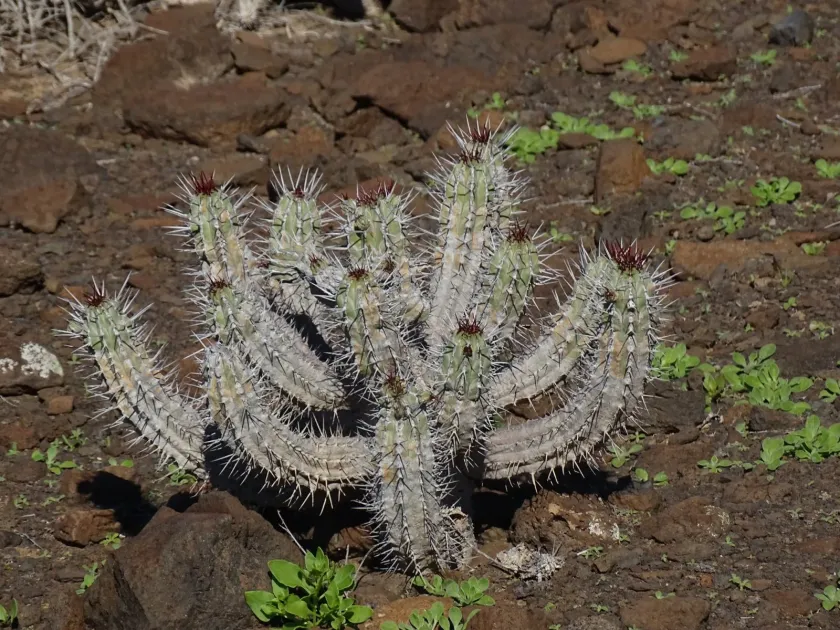
Description
Growing requirements
Euphorbia handiensis, commonly known as the Fuerteventura Spurge, is a unique succulent species belonging to the Euphorbiaceae family. It is strictly endemic to the island of Fuerteventura in the Canary Islands archipelago.
This plant is a shrubby succulent that can grow up to 1.5 meters in height. It features a distinctive cactus-like appearance with prominent, ribbed stems designed to store moisture, which is essential for survival in arid habitats.
The crop requires an extremely hot and dry climate with very limited annual rainfall. Successful cultivation necessitates well-drained, stony or sandy substrates with low organic content, mimicking the volcanic soil of its native environment.
In terms of agricultural management, preventing waterlogging is critical, as the root system is highly susceptible to decay. The plant thrives in full sun and cannot withstand freezing temperatures, requiring protection even during minor frost events.
Current economic use is largely confined to specialized horticulture and conservation biology. Due to its limited natural range and protected status, large-scale commercial agricultural production of this species is not feasible.
Main diseases and pests
The primary threats to Euphorbia handiensis include fungal infections triggered by excessive moisture and poor soil aeration.
Pests such as mealybugs and spider mites may infest the plant's soft stems when grown in greenhouse environments.
Physical damage to the stems creates entry points for various bacterial pathogens that can infiltrate the plant through its milky latex.
Environmental shifts and competition from invasive plant species put significant pressure on the native populations in the wild.
The lack of significant genetic diversity within the isolated population makes the species vulnerable to sudden outbreaks of plant diseases.