
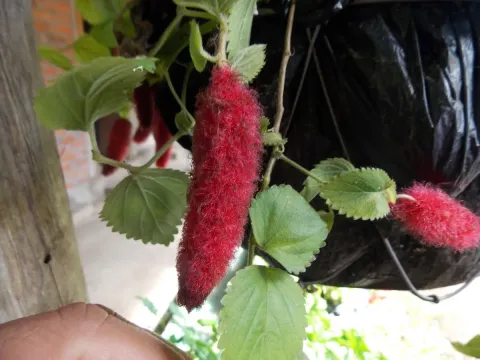
Strawberry Firetails
Acalypha pendula
Acalypha pendula, commonly known as Strawberry Firetails, belongs to the Euphorbiaceae family. This species originates from the tropical Fiji Islands, which dictates its preference for warm and humid environmental conditions.
What the section contains
Strawberry Firetails
The plant thrives in bright, filtered light. While it appreciates high light levels, direct harsh sunlight during peak hours can scorch the foliage, so positioning in a bright room away from direct rays is ideal.
Ideal temperatures range between 68°F and 77°F (20°C–25°C). The plant is sensitive to cold drafts and should be kept away from air conditioning vents or open windows during colder months to prevent leaf drop.
A well-draining, peat-based potting mix is recommended for optimal root health. The soil should remain consistently moist but never waterlogged; good drainage is essential to prevent root rot in this species.
In ornamental horticulture, this plant is valued for its unique, chenille-like red flowers that hang gracefully from the stems. It is most frequently grown as a hanging basket specimen in interiors or conservatories.
Spider mites are the most common pest, especially in low-humidity environments. Regularly misting the foliage or using a humidifier helps in keeping these pests at bay.
Mealybugs and aphids can also infest the stems and undersides of the leaves. Manual removal or the application of insecticidal soap is effective for early-stage infestations.
Root rot caused by poor soil drainage or overwatering is a significant threat. If the soil remains saturated for too long, the plant will show signs of wilting and yellowing.
Powdery mildew may occur if air circulation is poor. Improving ventilation around the plant and applying a mild fungicide can effectively manage this condition.
It is important to handle this plant with care, as its sap can cause skin irritation. Using gloves during pruning or repotting is highly recommended for safety.