
Steven's Spurge
Euphorbia stevenii
Description
Growing requirements
Steven's Spurge (Euphorbia stevenii) belongs to the Euphorbiaceae family. This perennial herbaceous plant is an endemic species primarily distributed throughout the Crimean Peninsula and some parts of the Caucasus region.
In its natural habitat, the crop prefers rocky slopes, limestone outcrops, and dry steppe areas. The plant exhibits high drought resistance, which is due to a well-developed root system capable of penetrating deep soil horizons.
For successful growth, Steven's Spurge requires full solar exposure and protection from shading by taller woody or shrub species. The plant is extremely sensitive to excessive soil moisture and waterlogging, making proper drainage a critical factor.
Soils for this crop should be nutrient-poor, light in texture, and preferably have a neutral to slightly alkaline pH level. Heavy clay substrates prone to water retention are detrimental to the plant's root crown.
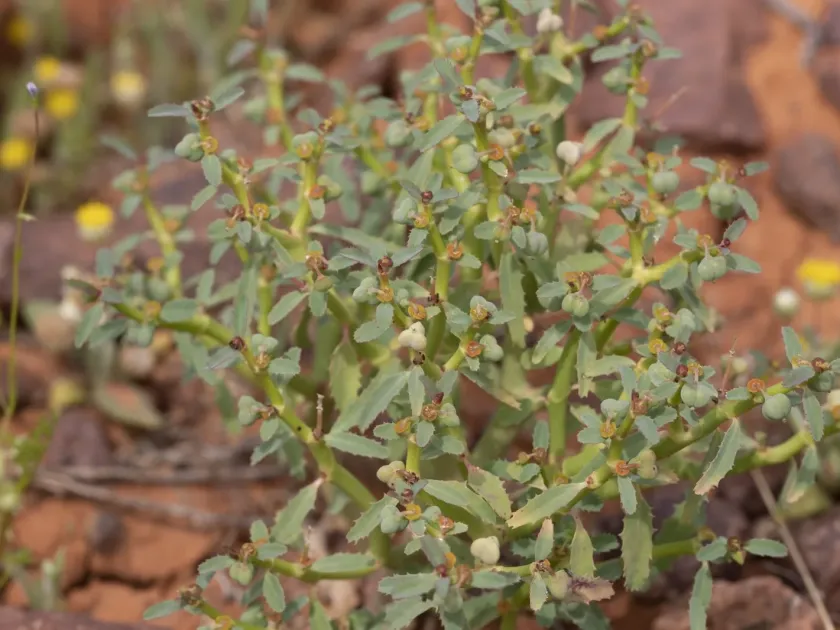
Botanically, the species is characterized by erect stems reaching 40–60 cm in height, covered with alternate lanceolate leaves. A distinct feature is the presence of milky latex in all parts of the plant, containing specific terpenoids and alkaloids.
Main diseases and pests
The main threat to Steven's Spurge under cultivation is root rot, which develops due to improper watering regimes and excessive substrate moisture.
The plant can be susceptible to specific types of rust fungi, which appear as dark spots on leaf blades during periods of high atmospheric humidity.
Pests such as spider mites may infest the plant during prolonged droughts, especially if grown in closed environments or garden plots with poor air circulation.
Aphids often damage young inflorescences by sucking sap, which can lead to stem deformation, reducing the ornamental value and overall vitality of the plant.
Disease prevention consists of strictly following agricultural practices, ensuring excellent ventilation of the planting site, and applying timely treatments with biological fungicides at the first sign of pathogens.