
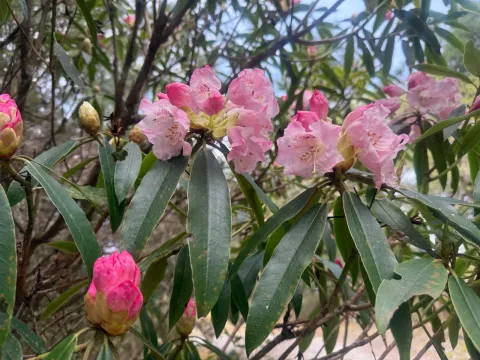
False chrysanthemum rhododendron
Rhododendron pseudochrysanthum
Rhododendron pseudochrysanthum is a hardy evergreen shrub belonging to the Ericaceae family. Native to the high-mountain regions of Taiwan, this species is well-adapted to cool, humid environments and exhibits a distinct, slow-growing habit.
What the section contains
False chrysanthemum rhododendron
To successfully cultivate this plant, one must provide acidic, well-draining soil with a pH level between 4.5 and 5.5. This species thrives in organic-rich substrates that mimic the natural forest floor conditions of its native habitat.
Botanically, it is distinguished by its compact, rounded shape and dark green leathery leaves. The undersides of the leaves are often covered in a felt-like, woolly indumentum, which is a key characteristic used for identification and protection against environmental stress.
Cultivation requires careful site selection, preferably in partial shade protected from harsh winds and intense mid-day sun. Providing consistent moisture and high humidity is essential, especially during the plant's active growing season.
Proper agro-technical maintenance includes annual mulching with pine needles or bark to keep the shallow root system cool and moist. Fertilization should be limited to products specifically formulated for acid-loving plants to prevent nutrient imbalances.
Fungal diseases are the primary threats to the health of the plant, often triggered by poor air circulation and excessive moisture. Common issues include root rot, leaf spot, and powdery mildew, which can significantly damage the plant's aesthetic value.
Pests such as rhododendron bugs, spider mites, and scale insects frequently attack the foliage. These pests thrive in dry conditions and can weaken the plant, making it more susceptible to environmental stress and secondary infections.
Management involves a proactive approach: regular inspection of the leaf underside, prompt removal of infected debris, and the strategic application of fungicides and insecticides when necessary during the early stages of an outbreak.
It is important to avoid over-fertilization, as high nitrogen levels can encourage succulent growth that is more attractive to sucking insects. A balanced, slow-release fertilizer is generally preferred for optimal long-term health.
Maintaining a clean garden environment and preventing water from splashing onto the leaves can significantly reduce the incidence of fungal pathogens, ensuring the long-term vigor and beauty of the rhododendron.