
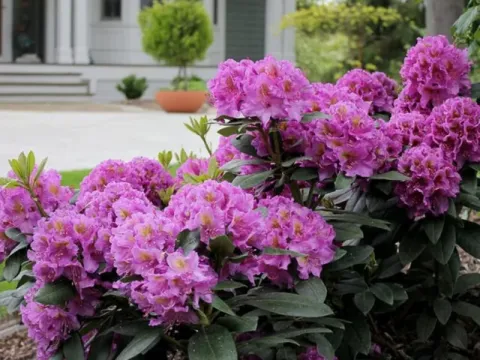
Evergreen rhododendron
Rhododendron evergreen
The evergreen rhododendron is a distinguished member of the Ericaceae family, widely cultivated for its ornamental value and year-round lush green foliage.
What the section contains
Evergreen rhododendron
Native to high-altitude regions and moist forest zones, these shrubs require specific environmental conditions to thrive, primarily high air humidity and protection from harsh direct sunlight.
They demand acidic soil conditions, typically ranging from pH 4.5 to 5.5, which allows the plant to absorb essential nutrients and thrive without suffering from chlorosis.
The soil structure must be loose, porous, and enriched with organic matter like peat or pine needles, ensuring excellent drainage to prevent root suffocation.
Proper site selection is crucial; these plants prefer semi-shaded locations that shield them from cold winter winds and the intense scorching afternoon sun.
Phytophthora root rot remains the most devastating threat to evergreen rhododendrons, especially in sites where drainage is insufficient and soil remains waterlogged.
Fungal infections such as leaf spot and rust are common in humid conditions with poor airflow, necessitating regular thinning of the plant structure.
Insect pests including lace bugs and mites often infest the foliage, causing significant discoloration and reducing the overall photosynthetic capacity of the plant.
Nematodes and scale insects can also affect the vigor of the rhododendron by disrupting vascular transport and causing branch dieback over time.
Integrated pest management, including regular inspection of the underside of leaves and appropriate treatment with fungicides and insecticides, is essential for maintaining health.