
Willow-leaved sea buckthorn
Hippophae salicifolia
Description
Growing requirements
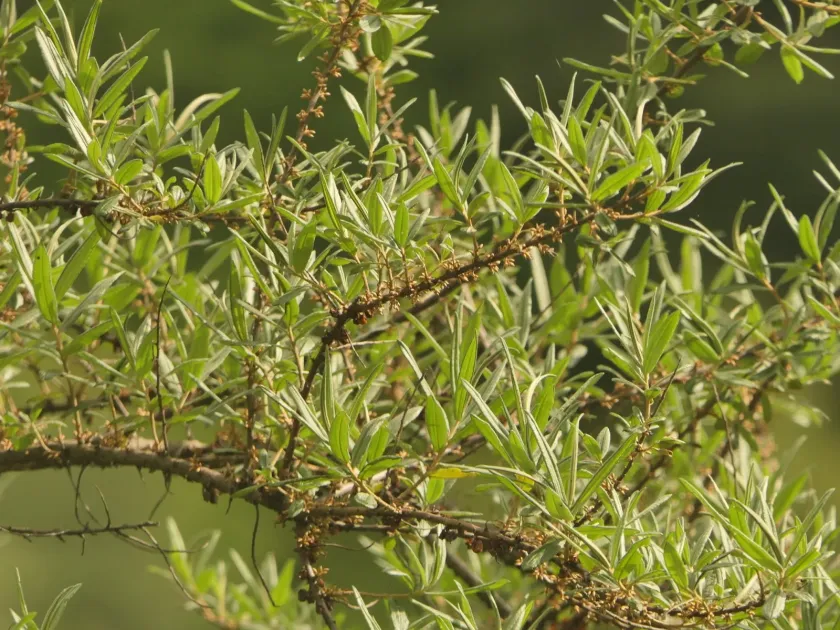
The willow-leaved sea buckthorn (Hippophae salicifolia) is a woody plant belonging to the Elaeagnaceae family. It is distinct from the common sea buckthorn due to its elongated, willow-like leaves and specific growth habits that reflect its high-altitude origin.
Native to the Himalayas, this species is naturally distributed across India, Nepal, and Bhutan. It typically thrives in alpine river valleys and alluvial plains, demonstrating a remarkable ability to colonize nutrient-poor, rocky substrates that are unsuitable for many other crops.
Optimal growth requires well-drained, porous soils. Despite its natural preference for riparian zones, the plant performs poorly in waterlogged soils, making soil aeration a primary concern for commercial cultivators. It thrives in open, sunny locations with protection from strong desiccating winds.
Regarding climate, the plant is well-adapted to the cool, temperate conditions of its mountainous origin. It requires a distinct dormant period during winter to initiate proper flowering and fruit set in the following spring, showing significant cold hardiness.
Its agricultural value lies in its high-quality fruit, which is rich in polyunsaturated fatty acids and antioxidants. Beyond commercial food production, the species is highly valued in ecological engineering for its nitrogen-fixing capabilities and effectiveness in controlling soil erosion on steep slopes.
Main diseases and pests
Like many species in the genus Hippophae, it is susceptible to fungal infections such as wilt and various types of rust. Crop management should focus on maintaining optimal spacing to ensure adequate airflow, which is critical for reducing humidity-related disease outbreaks.
Pest management involves monitoring for sea buckthorn flies and various scale insects. An integrated pest management (IPM) approach, emphasizing preventive pruning and monitoring cycles, is the most effective way to protect the crop without damaging the delicate ecosystem balance.