
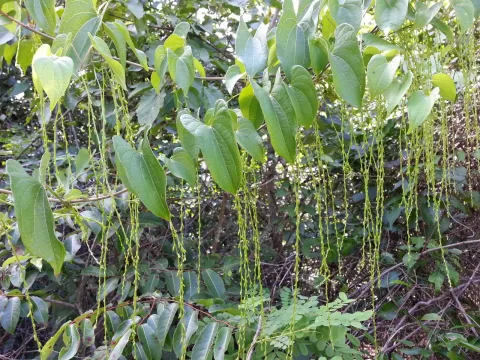
Dioscorea antaly
Dioscorea antaly
Planting Dioscorea antaly in its native regions is typically synchronized with the onset of the rainy season, ensuring adequate moisture for tuber sprouting.
What the section contains
Dioscorea antaly
For vegetative propagation, whole small tubers or tuber fragments with active buds are used, planted in pre-loosened soil at a depth of 10 to 15 centimeters.
An optimal planting layout involves a row spacing of approximately 80–100 cm to provide plants with sufficient space for vigorous development of the aerial biomass.
In cultivation, it is essential to provide supports or trellises, as Dioscorea is a climbing vine that requires vertical growth for efficient photosynthesis.
Applying organic fertilizers into the planting pits significantly accelerates the initial stage of root system development and supports the formation of high-quality tubers.
Dioscorea antaly belongs to the Dioscoreaceae family and is a tropical crop with strict temperature requirements, as it is highly sensitive to frost.
The plant thrives in well-drained, fertile sandy loam or light loam soils, as waterlogging is detrimental to the development of its tubers.
While stable lighting is required for success, the crop can tolerate short periods of shading during peak heat, reflecting its natural forest-edge habitat.
Moisture needs remain high throughout the active growth period, particularly during the tuber formation phase, necessitating regular irrigation in the absence of sufficient rainfall.
The crop shows optimal productivity in soils with a pH range of 5.5–6.5, which ensures the best bioavailability of microelements for robust underground organ growth.
The maturation period for Dioscorea antaly tubers ranges from 7 to 9 months, depending on specific varietal traits and the prevailing climatic conditions of the season.
Total yield is heavily influenced by the intensity of agricultural practices, the quality of planting material, and the provision of structural support for the vines.
With proper management, the weight of individual tubers can reach several kilograms, positioning this species as a valuable prospect for local food security.
Stabilization of yields is often achieved through mulching the soil, which helps maintain moisture levels and suppresses weed competition around the young vines.
Peak output is typically harvested once the aerial parts of the plant naturally die back, which signals that starch accumulation in the tubers has reached its maximum.
The primary threats to this crop include fungal infections, which thrive under conditions of excessive humidity and poor ventilation within dense stands.
Soil-dwelling nematodes are significant pests, as they infest the tubers, leading to physical deformation and a decrease in both nutritional and market value.
Leaf-eating insects can cause substantial damage during the early stages of vegetation, affecting young foliage and slowing the overall rate of plant development.
To prevent disease spread, agronomists strongly recommend strict crop rotation protocols and avoiding the cultivation of Dioscorea on the same plots in successive years.
Regular phytosanitary monitoring is essential, with the immediate removal of infected plant parts to prevent the rapid spread of pathogens throughout the plantation.
Harvesting begins after the aerial parts of the vine have yellowed and dried, providing a clear visual indicator that the tubers have reached maturity.
To extract the tubers from the soil, the use of forks or specialized diggers is recommended to minimize mechanical damage to the surface of the produce.
After harvesting, tubers should be dried in a sheltered, shaded area, which promotes the healing of minor wounds and enhances their longevity during storage.
Properly cured tubers, when kept under controlled temperature conditions, can be stored for extended periods without losing their nutritional properties or flavor.
Economic use primarily involves human consumption after thorough thermal processing, which is necessary to neutralize certain natural compounds found in the Dioscoreaceae family.