
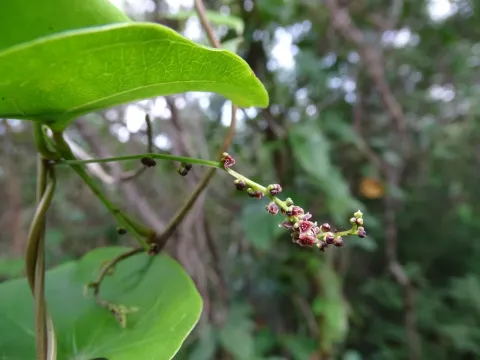
Dioscorea floribunda
Dioscorea floribunda
Dioscorea floribunda is primarily propagated through vegetative means, specifically using rhizome segments, as seed reproduction is slow and inefficient.
What the section contains
Dioscorea floribunda
Planting is conducted in well-prepared beds during the onset of the warm season to facilitate early rooting and establishment.
Selected rhizome cuttings must be inspected for health and treated with suitable fungicides to prevent soil-borne pathogens from attacking the plant.
The spacing between plants must be carefully calibrated to ensure sufficient room for the sprawling vines and the expansion of the underground tubers.
Proper planting depth is essential to protect the growing tips while allowing for efficient mechanical harvesting later in the cultivation cycle.
As a tropical perennial of the Dioscoreaceae family, this species requires a warm and humid environment to achieve maximum growth potential.
The crop thrives in light, well-draining sandy loam soils that prevent waterlogging and facilitate the vertical development of the rhizomes.
Soil pH should remain in the neutral or slightly acidic range, providing optimal conditions for nutrient uptake and root health.
Consistent moisture management is required, especially during the peak growth phase, alongside protection from strong, drying winds.
Strategic fertilization focusing on potassium and phosphorus is crucial to support the synthesis of high-value steroid precursors within the plant.
The agricultural value of Dioscorea floribunda is primarily defined by the concentration of steroidal saponins, specifically diosgenin, within its tubers.
It is a highly valued industrial crop utilized in the pharmaceutical sector for the semi-synthesis of various corticosteroid and hormonal drugs.
Yield is cumulative, as the accumulation of active phytochemical compounds increases with the age of the plant and the maturity of the rhizome system.
The vine-like growth habit allows for innovative cultivation techniques, such as trellis growing, which can maximize the usable surface area per hectare.
Advanced processing facilities are necessary to extract the desired compounds efficiently from the fibrous structure of the harvested rhizomes.
Fungal infections of the root system represent the most significant threat, often induced by improper irrigation and poor soil aeration.
Soil-dwelling pests, including nematodes and various larvae, can cause substantial damage to the tubers, reducing both quantity and quality of output.
Integrated pest management, including systematic crop rotation and careful site selection, is fundamental to minimizing these agricultural risks.
Early-stage weed control is critical, as young Dioscorea plants exhibit slow initial growth and are easily suppressed by aggressive weed species.
Monitoring for signs of systemic viral infections is essential, and any symptomatic plants should be promptly eradicated to prevent widespread infestation.
Harvesting is typically timed for the third to fifth year of growth, when the saponin content in the rhizomes reaches its biochemical peak.
The process is often mechanized, employing specialized deep-plowing equipment to extract the tubers without causing excessive mechanical stress.
Post-harvest handling involves thorough cleaning, slicing, and drying under strict temperature controls to maintain the integrity of the bioactive compounds.
Proper drying is the most delicate stage, as excessive heat can lead to the denaturation of the target chemicals, impacting the market value of the crop.
Finished raw material must be stored in cool, dry, and well-ventilated conditions to prevent degradation and contamination before delivery to pharmaceutical manufacturers.