
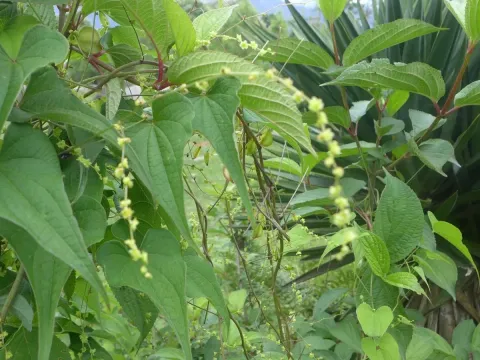
Dioscorea deltoidea
Dioscorea deltoidea
Dioscorea deltoidea is a perennial climbing plant belonging to the Dioscoreaceae family. Originating from the Himalayan region, this species is highly valued for its medicinal properties, specifically its high content of steroidal saponins.
What the section contains
Dioscorea deltoidea
Propagation is generally performed through seeds or rhizome cuttings. Seeds require a period of stratification to improve germination rates, as the species exhibits a natural dormancy period adapted to mountain climates.
Vegetative propagation via rhizome division is the preferred method for commercial cultivation, as it ensures genetic consistency and faster development of the plant compared to seedlings.
Planting is carried out in early spring when the soil temperature consistently stays above 10 degrees Celsius. Providing trellises or supports is essential for vertical growth, which facilitates better light interception and airflow.
In the first growing season, plants prioritize root system expansion. The aerial parts remain relatively underdeveloped until the second or third year, marking the establishment phase of the crop.
The plant thrives in well-drained, fertile, and deep soils, preferably with a loamy texture. It is highly sensitive to waterlogging, which quickly leads to the decay of the tuberous rhizomes.
Climatic requirements include moderate temperatures and consistent moisture during the active vegetative phase. While the species is adapted to cooler mountain regions, it performs best in sheltered areas away from strong, drying winds.
Soil pH should be maintained in the slightly acidic to neutral range. Incorporating organic matter during site preparation is recommended to boost long-term soil structure and fertility.
Adequate sunlight is necessary for robust growth; however, young plants may benefit from partial shade during their first season to mitigate the risk of dehydration and heat stress.
Regular monitoring of irrigation is crucial. While the plant requires stable moisture, the soil surface should ideally dry out slightly between waterings to maintain a healthy root environment.
The economic value of Dioscorea deltoidea lies in its rhizomes. Harvesting is typically delayed until the plant is 3 to 4 years old, allowing the tuberous roots to accumulate a high concentration of active compounds.
Yield varies significantly based on environmental conditions and management practices. On average, commercial plantations can produce 1.5 to 2 tons of dry rhizome weight per hectare under optimal conditions.
Root growth continues steadily until the plant reaches maturity at year 5. Harvesting before this period may result in lower saponin density, while delaying beyond year 6 may lead to tissue senescence.
Proper spacing is a key yield determinant. Planting density should allow for individual rhizome expansion, as overcrowding can restrict root size and decrease the overall quality of the medical harvest.
Yield optimization is closely linked to the nutritional management of the soil. Balanced NPK fertilization ensures that the plant develops enough energy reserves to support the growth of large, healthy rhizomes.
The main pests affecting the crop include soil-dwelling insects like wireworms, which can cause significant damage by boring into the rhizomes, leading to secondary infections and quality loss.
Fungal pathogens causing root rot are the primary threat, especially in soils with poor drainage. Once established, these diseases can rapidly spread through a plantation, necessitating immediate removal of infected plants.
Powdery mildew may occur on the leaves during periods of high humidity and poor air circulation. While usually non-lethal, it can weaken the plant and reduce its total biomass and root storage.
Nematodes are another significant concern, as they disrupt root development and overall plant vitality. Crop rotation with non-host species is the most effective preventative measure against such infestations.
Effective management requires a proactive approach, emphasizing healthy soil microbial balance and the removal of weed hosts that might harbor pests or diseases near the crop area.
Harvesting takes place in late autumn when the aerial stems start to yellow and wither, signaling that the plant has entered its dormant phase and the energy has shifted to the rhizome.
Mechanical harvesting tools are used to lift the rhizomes, ensuring the soil is broken deeply enough to prevent mechanical cuts, which can lead to rapid post-harvest rot and loss of market value.
Once harvested, the rhizomes must be cleaned of excess soil and debris as soon as possible. Processing should be rapid to prevent enzymatic degradation of the active substances.
The material is dried in temperature-controlled facilities at 40–50 degrees Celsius. This careful drying process preserves the medicinal efficacy of the steroidal compounds within the tubers.
Storage is the final stage, requiring low-humidity, dark conditions to ensure the shelf life of the dried rhizomes. Properly stored material can remain potent for several years.