
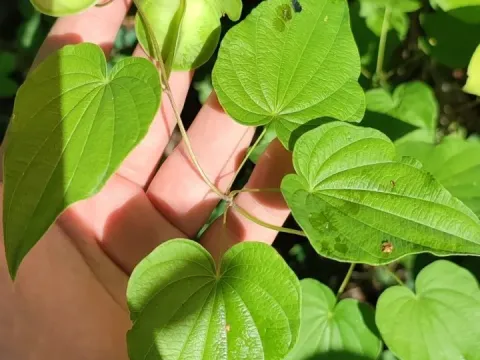
Caucasian yam
Dioscorea caucasica
Caucasian yam (Dioscorea caucasica) is a perennial climbing plant belonging to the Dioscoreaceae family. Propagation is primarily achieved through seeds or by dividing the rhizomes. Seeds require a stratification period of two to three months at cool, positive temperatures to break dormancy and ensure high germination rates.
What the section contains
Caucasian yam
When sowing in open ground, it is recommended to do so in the autumn. This allows seeds to undergo natural stratification throughout the winter. If spring sowing is preferred, seeds must be kept in a refrigerator or a cold cellar before being planted at a depth of 1–2 centimeters.
Rhizome division is considered a more efficient method for establishing a new crop. Segments of the rhizome with at least one viable bud are planted at a depth of 5–10 centimeters. This method is best performed in early spring or autumn when the plant is in a state of dormancy.
Young plants develop very slowly during their first year of growth. It is crucial to maintain consistent moisture in the root zone and protect seedlings from harsh, direct sunlight, which can easily desiccate the delicate root systems.
The spacing between plants should be approximately 30–40 centimeters to ensure adequate space for the rhizome to expand. Providing high-quality, loose soil during the planting phase is essential for long-term health and productivity.
As an endemic species of the Caucasus, this plant thrives in moderate climates, preferring locations with partial shade and high soil humidity. Forest edges or river valleys are ideal natural habitats that should be mimicked in agricultural settings.
The soil must be loose, deep, and rich in organic matter. A neutral or slightly acidic pH is preferred. Heavy clay soils that retain excess water should be amended with sand or gravel to prevent the root system from rotting due to poor aeration.
Caucasian yam requires a stable water supply throughout the growing season. While it is hardy, the plant does not tolerate waterlogging. Irrigation should be managed carefully to keep the soil moist but never saturated.
Being a climber, the plant requires structural support. Installing trellises, nets, or utilizing existing woody vegetation is necessary for the plant to reach its full photosynthetic potential, which in turn fuels the growth of the medicinal rhizomes.
Fertilization should be handled with caution. Adding compost or well-rotted manure in the early spring is usually sufficient. Over-fertilization with nitrogen can encourage excessive leaf growth at the expense of rhizome development, so phosphorus and potassium are preferred.
The economic value of Dioscorea caucasica lies in its rhizomes, which are rich in steroid saponins used by the pharmaceutical industry. Because the plant grows slowly, full maturity and maximum active substance content are typically reached only after 10–15 years.
The yield of raw material is proportional to the age of the plantation. A single well-tended, mature plant can produce a substantial rhizome mass. Commercially, it is best to manage plantations with varying plant ages to allow for a sustainable, annual harvest.
Growth rate is influenced by climate, soil quality, and the presence of proper climbing structures. Consistent care throughout the long growth cycle directly correlates with the concentration of saponins, which determines the market value of the crop.
Quality control is vital, as the pharmaceutical industry demands specific chemical profiles. Proper post-harvest handling, including cleaning and drying, is essential to ensure that the active compounds remain stable and effective for medicinal use.
Due to its status as a protected or threatened species in the wild, cultivation is not only economically beneficial but also crucial for conservation efforts, ensuring a steady supply without further depleting native wild populations.
Caucasian yam is generally robust but can be susceptible to fungal infections, particularly root rot, which often occurs in poorly drained soils. Excess moisture around the root neck is the most frequent cause of health failure in this crop.
Pests like aphids and spider mites may infest the leaves during dry periods, weakening the plant. Biological pest control methods, such as using horticultural soaps or introducing predatory insects, are preferred over chemical pesticides to maintain the medicinal quality of the harvest.
Slugs and snails can be problematic for young sprouts. Creating barriers around the planting area or using natural repellents like wood ash can help protect the foliage from early damage.
Anthracnose and various leaf spots are risks when planting density is too high, leading to poor air circulation. Regular thinning and the prompt removal of any diseased leaf material are essential for maintaining a healthy, disease-free environment.
Preventive measures include following proper crop rotation patterns and avoiding planting in the same location for at least 5–7 years, which helps break the lifecycle of soil-borne pathogens that might damage the tubers.
Harvesting is performed once the plant enters dormancy, typically in late autumn when the aerial parts die back. The soil should be loosened carefully using forks to avoid damaging the brittle rhizomes, as any injury reduces the quality of the raw material.
Once lifted, the rhizomes must be cleaned of all soil and debris. Smaller side roots should be removed, and the primary rhizome should be washed with cool, clean water. Using soft brushes helps ensure all soil is removed from the deep grooves.
To facilitate efficient drying, the rhizomes are cut into manageable pieces of 5–10 centimeters. Drying should occur in a well-ventilated, shaded area or in specialized industrial dryers at temperatures not exceeding 60 degrees Celsius.
Properly dried material should be brittle and lose most of its water content, which prevents mold and microbial degradation. The final product should be stored in breathable containers, such as paper sacks or wooden boxes, kept in a cool, dry place.
Ensuring that the moisture content is kept low during long-term storage is the key to preserving the potency of the steroid saponins. Periodic inspections of the stored harvest are recommended to ensure no moisture accumulation or pest issues arise.