
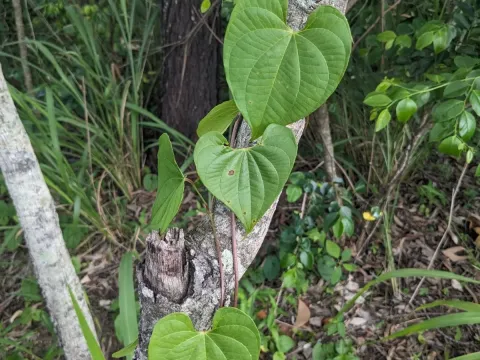
Dioscorea
Dioscorea L.
Planting Dioscorea is typically conducted in the spring when soil temperatures reach a consistent range of 15–18°C, which is vital for initial sprouting.
What the section contains
 Chinese yam
Dioscorea polystachya Turrcz.
Chinese yam
Dioscorea polystachya Turrcz.
 Cush-cush yam
Dioscorea trifida L. f.
Cush-cush yam
Dioscorea trifida L. f.
 Dioscorea bulbifera
 L.
Dioscorea bulbifera
Dioscorea bulbifera L.
 Dioscorea hispida
 Dennst.
Dioscorea hispida
Dioscorea hispida Dennst.
 Hamilton's Yam
Dioscorea hamiltonii Hook. f.
Hamilton's Yam
Dioscorea hamiltonii Hook. f.
 Japanese yam
Dioscorea japonica Thunb.
Japanese yam
Dioscorea japonica Thunb.
 Lesser yam
Dioscorea esculenta (Lour.) Burkill
Lesser yam
Dioscorea esculenta (Lour.) Burkill
 Water yam
Dioscorea alata L.
Water yam
Dioscorea alata L.
 Yellow yam
Dioscorea cayenensis Lam.
Yellow yam
Dioscorea cayenensis Lam.
Dioscorea
The planting material consists of tuber sections weighing between 50 and 150 grams, buried at a depth of 10 to 15 centimeters in well-prepared soil.
Proper spacing is essential for plant health; typically, plants are set 40–50 cm apart, with rows spaced about 80–100 cm to ensure adequate resource competition.
Because Dioscorea is a climbing vine, trellis or stake support systems must be installed at the time of planting to facilitate vertical growth.
In regions with shorter growing seasons, indoor pre-sprouting of tubers is recommended to gain a head start before moving plants to the field.
Dioscorea belongs to the Dioscoreaceae family and is a strictly tropical crop requiring a long frost-free period to reach full physiological maturity.
The optimal temperature range for rapid growth is between 25°C and 30°C; growth rates drop significantly if temperatures fall below 10°C.
The crop thrives in deep, loose, well-drained loamy or sandy soils, as waterlogging is highly detrimental and often leads to root rot.
Consistent soil moisture is required during the active growth phase, though irrigation must be carefully managed to prevent saturation of the root zone.
Soil pH levels should ideally range between 5.5 and 7.0 to maximize nutrient availability and promote strong development of the root system.
The yield potential of Dioscorea is highly variable, depending on the cultivar selection, regional climate, and the intensity of cultural practices.
Under optimal conditions and intensive management, commercial growers can expect yields ranging from 20 to 40 metric tons per hectare.
The total vegetative cycle is extensive, lasting anywhere from 200 to 300 days, during which the plant continuously accumulates biomass in its tubers.
Balanced fertilization, particularly with high levels of potassium and phosphorus, is crucial for maximizing tuber density and final harvest mass.
Productivity is directly linked to the quality of the parent tubers used at planting; using disease-free material is the primary factor in yield stability.
Common diseases affecting the crop include various tuber rots, often induced by fungi such as Fusarium or Aspergillus during periods of excessive moisture.
Anthracnose is a frequent foliage disease that can significantly diminish the leaf surface area, leading to poor tuber development and reduced harvest.
Nematodes represent a severe threat to commercial production, as they damage root integrity and render the tubers prone to decay during storage.
Pests like aphids and spider mites can infest the foliage, particularly in arid climates, causing stress to the plant and inhibiting normal nutrient transport.
Management strategies include strict crop rotation, the use of certified disease-free planting stocks, and targeted fungicide applications when necessary.
The harvest period begins once the vine foliage turns yellow and dies back, indicating that the plant has completed its cycle and tuber growth has ceased.
Tubers must be excavated with extreme care to avoid skin damage, as abrasions provide entry points for pathogens and negatively impact long-term storage.
After excavation, it is standard practice to allow the tubers to cure in a shaded, well-ventilated area for several days to harden the skin.
Cured tubers should be stored in a cool, dark, and dry environment at approximately 10–15°C to maintain quality and prevent unwanted sprouting.
Proper packaging and careful handling during transport are essential to maintain the commercial value of the crop until it reaches the end market.