
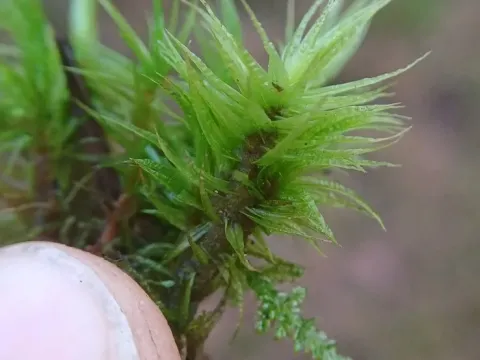
Dicranum
Dicranum
Dicranum is a genus of mosses belonging to the Dicranaceae family, widely recognized for its dense, cushion-like growth form. These mosses are iconic components of forest floor ecosystems throughout the Northern Hemisphere, often appearing as lush green carpets.
What the section contains
 Dicranum bonjeanii
Dicranum bonjeanii
Dicranum bonjeanii
 Dicranum elongatum
Dicranum elongatum
Dicranum elongatum
 Dicranum flexicaule
Dicranum flexicaule
Dicranum flexicaule
 Dicranum fuscescens
Dicranum fuscescens
Dicranum fuscescens
 Dicranum leioneuron
Dicranum leioneuron
Dicranum leioneuron
 Dicranum polysetum
Dicranum polysetum
Dicranum polysetum
 Dicranum scoparium
Dicranum scoparium
Dicranum scoparium
 Dicranum scottianum
Dicranum scottianum
Dicranum scottianum
 Dicranum tauricum
Dicranum tauricum
Dicranum tauricum
 Dicranum undulatum
Dicranum undulatum
Dicranum undulatum
 False dicranum moss
Dicranum spurium
False dicranum moss
Dicranum spurium
 Greater Fork-moss
Dicranum majus
Rugose dicranum moss
Dicranum rugosum
Greater Fork-moss
Dicranum majus
Rugose dicranum moss
Dicranum rugosum
Dicranum
Botanically, Dicranum species are characterized by their narrow, lanceolate leaves, which are often curved or sickle-shaped. The stems are typically erect and branched, allowing the moss to create a complex microhabitat for microorganisms and small invertebrates.
These mosses thrive in acidic environments and are commonly found on decaying logs, stumps, and rocky terrain in coniferous and deciduous forests. They require high levels of atmospheric humidity to maintain optimal turgor pressure and metabolic activity.
Regarding their environmental requirements, Dicranum prefers shaded or semi-shaded locations. Direct sun exposure is detrimental as it accelerates evaporation, leading to the desiccation of the delicate leaf tissues and subsequent dormancy of the plant.
Successful management of these mosses requires careful attention to soil pH and moisture balance. They are highly efficient at nutrient absorption from rain and mist, making them excellent indicators of atmospheric air quality and local microclimate health.
The primary threats to Dicranum populations include atmospheric pollution and industrial acid rain. Because mosses lack a cuticle layer to filter absorbed water, they readily accumulate harmful heavy metals, which can be toxic to the plant cells.
Inappropriate hydrologic conditions, such as prolonged waterlogging, are also problematic. When stagnant water sits at the base of the moss mat, it inhibits gas exchange, promoting the growth of anaerobic bacteria and fungi that lead to rot.
Climate change poses a significant risk to the long-term survival of this genus. Rising temperatures and altered precipitation patterns reduce the length of the active growth season, causing the moss to spend more time in a stress-induced dormant state.
Physical habitat destruction, including forest fragmentation, logging, and heavy human foot traffic in recreational areas, leads to the mechanical fragmentation of the moss mats, often resulting in local eradication of the species.
Finally, competition from rapidly spreading vascular plants or invasive algae can suppress Dicranum growth. Maintaining a clean growing environment, free from aggressive competitive weeds, is essential for preserving healthy patches of this moss.