
Greater Fork-moss
Dicranum majus
Description
Growing requirements
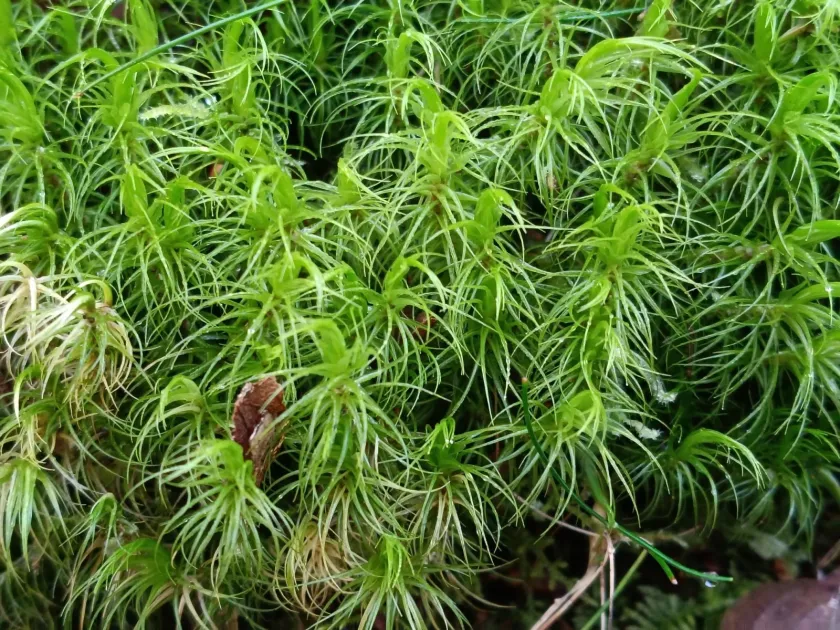
Greater Fork-moss (Dicranum majus) is a large, perennial moss species belonging to the Dicranaceae family. Known for its distinct, sickle-shaped leaves and dense, dark green turfs, this plant is a common inhabitant of temperate forest floors throughout the Northern Hemisphere.
The ecological requirements of Dicranum majus are strictly tied to high humidity and stable, cool microclimates. It thrives in shaded environments, typically on acidic soils or decaying wood, where it acts as a primary component of the forest understory biodiversity.
In ornamental and controlled settings, the plant requires a moisture-retentive, acidic substrate. Unlike traditional agricultural crops, it does not rely on soil nutrients in the conventional sense but derives hydration and essential minerals directly from the atmosphere and rainfall.
Botanically, it is characterized by its large size relative to other moss species. Its shoots can grow several centimeters tall, and the lack of vascular tissues means that water management is entirely dependent on ambient air humidity and regular misting.
Success in cultivating this moss depends on mimicking its natural habitat. This involves maintaining consistent shade, protection from drying winds, and avoiding substrates that have high mineral salt concentrations, which can be toxic to the moss.
Main diseases and pests
The primary threat to Greater Fork-moss is air pollution. As an effective bioindicator, the moss absorbs pollutants directly from the air, which can cause tissue damage and mortality in urban or industrial areas where sulfur dioxide levels are elevated.
Pests such as gastropods, including snails and slugs, are known to feed on moss patches, potentially damaging their structural integrity. Effective management requires constant monitoring and the use of physical barriers to prevent infestation in specialized moss gardens.
Pathogenic fungi present a significant risk in confined or high-humidity environments. Poor air circulation often leads to outbreaks of gray mold or other fungal pathogens, which can rapidly deteriorate the visual quality and health of the moss colony.
Competition from faster-growing bryophytes or vascular weeds can suppress the development of Dicranum majus. Removing invasive plants is essential to ensure that the moss maintains its preferred coverage and sunlight exposure levels.
Environmental stress, particularly sudden drought or excessive temperature spikes, leads to rapid dehydration and loss of green coloration. Proper management requires careful climate control and the maintenance of a stable moisture regime to ensure long-term viability.